

Last Updated: November 7, 2026
Quick Summary
The best post-op massage for traveling patients is one built around your flight, hotel room, and written surgeon clearance, not the other way around. Book a licensed therapist who requires written surgeon clearance before the first session and confirms they serve your exact hotel or rental address.
- Ask seven vetting questions, including state licensure and monthly post-surgical client volume, before booking.
- Mobile therapists bring a portable table and linens; confirm your room fits a 2-by-1-meter setup.
- After a Brazilian butt lift, the buttocks are typically off-limits for massage during early recovery.
- Work backward from your flight and check-out date, and build in a buffer day before air travel.
- Bring your compression garment to every appointment and expect the therapist to work around it.
Table of Contents
- What Traveling Patients Need to Know About Post-Op Massage
- Post-Op Lymphatic Massage: How It Supports Swelling and Fluid Movement
- Choosing a Traveling Post-Op Massage Therapist: 7 Questions to Ask
- Mobile Post-Op Massage: What to Expect at Your Hotel or Recovery Rental
- In-Home Massage After Surgery: Setting Up a Safe Recovery Space
- Comparing Mobile, Clinic-Based, and Recovery-Center Care
- Procedure-Specific Safety and Surgeon Clearance Before You Book
- Booking Your Post-Op Massage in Fort Lauderdale
- Frequently Asked Questions
What Traveling Patients Need to Know About Post-Op Massage
The best post-op massage for traveling patients is one that fits around a flight, a hotel room, and a surgeon’s clearance schedule, not the other way around. Women who travel to South Florida for surgery often need lymphatic care before they fly home, and booking a session before the surgeon has signed off is one of the most common mistakes.
Post-operative massage is a structured, hands-on treatment that supports fluid movement, tissue healing, and comfort after cosmetic surgery. It is not a spa indulgence, and it is not a substitute for medical follow-up.
Timing matters more than technique here. Most surgeons want to see a patient before anyone touches the surgical site, and that clearance should be in writing. FDA guidance on cosmetic surgery recovery reinforces that recovery instructions come from the operating surgeon, not from a massage provider.
Below is a practical framework for choosing care on the road: what to ask, what to expect, and how to keep treatment consistent from one city to the next.
Post-Op Lymphatic Massage: How It Supports Swelling and Fluid Movement
Post-op lymphatic massage is a gentle manual technique that encourages lymph fluid to move toward functioning lymph nodes, where the body clears it (Lymphatic Drainage Massage: What It Is & Benefits). Swelling and edema after surgery are normal, and the lymphatic system is the body’s built-in drainage route.
Manual lymphatic drainage differs from deep tissue work. The pressure is light and rhythmic, and the goal is fluid movement, not muscle release. That distinction matters after liposuction or a tummy tuck, when tissue is tender and a surgical site is still closing.
Lymphatic drainage massage is not a detox treatment and does not “flush toxins” in any medical sense. It supports the body’s own drainage. Cleveland Clinic overview of the lymphatic system explains how lymph nodes and vessels handle fluid clearance.
Watch out: swelling that is hot, hard, one-sided, or paired with fever is not a massage problem. Readers who want to tell ordinary post-op swelling apart from fluid retention that needs medical attention can learn how to spot fluid retention in post-op swelling. That warrants a call to the surgeon or urgent care before any appointment.
Choosing a Traveling Post-Op Massage Therapist: 7 Questions to Ask
A traveling post-op massage therapist should be licensed, experienced with surgical recovery, and willing to coordinate with the operating surgeon. Everything else is secondary. The challenge for a traveling patient is that you are vetting someone in a city you may not know, often before you have even left home.
Ask these seven questions before booking, and listen for how specific the answers are:
- Are you licensed in this state, and can you share the license number? Verify it through the state’s professional licensing board rather than relying on a website badge.
- How many post-surgical clients do you treat in a typical month? A therapist who sees post-op clients weekly will describe patterns; one who sees them occasionally will speak in generalities.
- Do you require written surgeon clearance before the first session? The right answer is yes, every time, no exceptions.
- What training do you have in manual lymphatic drainage? Look for a named certification or course, not just “experience.”
- How do you modify pressure for a fresh surgical site? A strong answer distinguishes drainage work from deep tissue and names the areas that stay off-limits.
- What is your protocol if swelling looks unusual? The therapist should describe stopping the session and directing you to your surgeon, not working through it.
- Can you send a short summary to my surgeon after each session? Continuity of care matters more when you are away from your surgical team.
A vague answer to question three is a red flag. So is any therapist who promises a specific number of sessions will “fix” fibrosis or guarantee a result.
How to vet a provider from out of state
Start with the state licensing board lookup, then ask for the therapist’s post-op training and two professional references you can contact. Confirm the therapist’s service area covers your specific hotel or recovery rental address, and ask about availability during your stay, a therapist who is booked solid the week you arrive is not a practical choice. If your surgeon has a preferred provider list, ask for it; many surgical practices maintain relationships with local lymphatic specialists.
Coordinating with your surgeon remotely
Before you travel, ask your surgeon’s office whether they will provide written clearance for a therapist they have not met, and what information they want sent back. Some surgeons prefer a brief note after each session; others want a summary at the end of your stay.
Readers vetting a provider from out of state can use this guide to finding a reputable post-surgical care clinic before committing to a booking.
Watch out: a therapist who discourages you from contacting your surgeon, or who offers to “handle” clearance for you, is not a safe choice regardless of credentials.
Mobile Post-Op Massage: What to Expect at Your Hotel or Recovery Rental
Mobile post-op massage brings a licensed therapist, a portable table, and clean linens to a hotel room or recovery rental. The session follows the same structure as a clinic visit: intake, gentle drainage work, and aftercare notes.
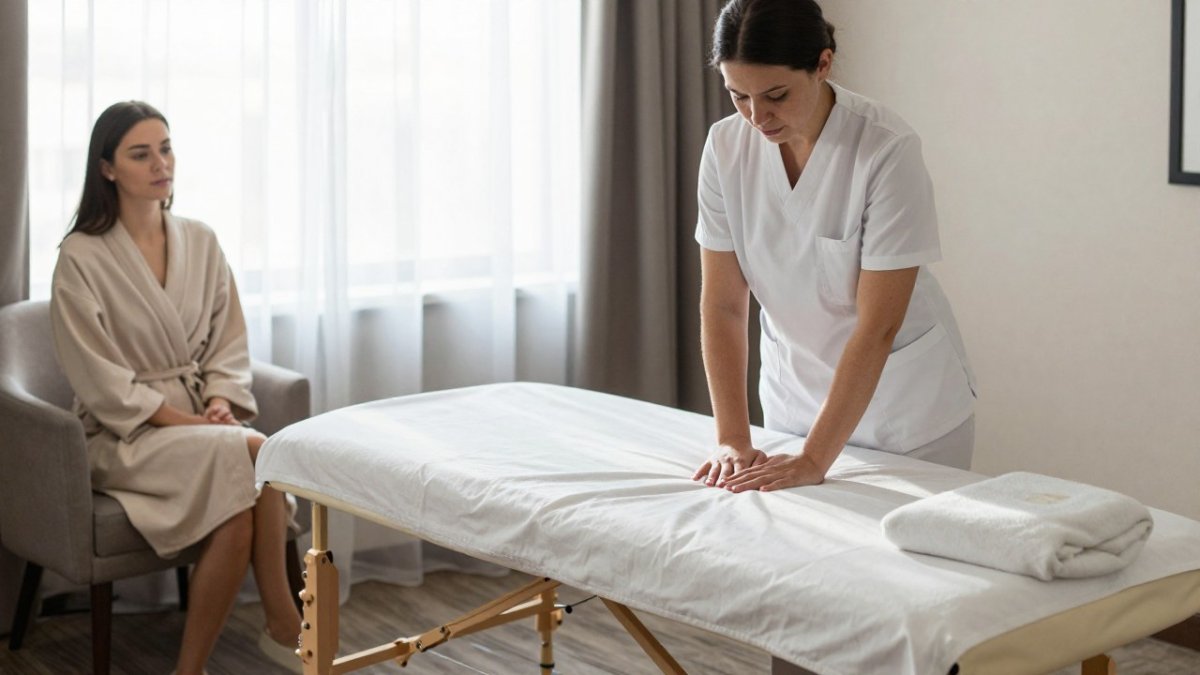
Expect the therapist to ask about the procedure date, the surgeon’s instructions, and compression garment rules. Bring the garment, a loose change of clothes, and a list of medications.
Space is the practical constraint. A standard hotel room works if furniture can shift a meter or so. Recovery rentals with a living area are easier.
Traveling patients should confirm the therapist serves their specific hotel or rental address before paying a deposit, and should ask whether a companion can stay in the room.
In-Home Massage After Surgery: Setting Up a Safe Recovery Space
In-home massage after surgery works best when the space is prepared before the therapist arrives. A cleared area, a firm surface, and good lighting cover most of it.
Use this checklist:
- Clear a space at least 2 meters by 1 meter for the table
- Set the room temperature warm; post-op patients chill easily
- Place water, a light blanket, and the compression garment within reach
- Have the surgeon’s written instructions on hand
- Put pets in another room for the duration
- Confirm parking and building access for the therapist
Comparing Mobile, Clinic-Based, and Recovery-Center Care
Three care settings dominate post-op recovery, and each suits a different stage of healing.
| Setting | Best For | Watch Out For |
|---|---|---|
| Mobile to hotel or rental | Patients with limited mobility in the first days | Less equipment on hand; confirm the therapist’s travel range |
| Clinic-based | Consistent protocols and access to add-on therapies | Requires transport and time out of the compression garment |
| Recovery center | Patients staying on-site with nursing support nearby | Verify who actually performs the massage |
Mobile care wins on convenience and continuity for short trips. Clinic-based care wins on consistency when a patient is in town for a week or more and wants the same therapist each visit. Recovery centers suit patients whose surgeon wants close monitoring.
For a fuller look at local options, including lymphatic massage and fibrosis treatment, see this overview of post-op care in Fort Lauderdale.
Procedure-Specific Safety and Surgeon Clearance Before You Book
Surgeon clearance is the non-negotiable step, and it looks different by procedure.
After liposuction or Lipo 360, many surgeons allow gentle lymphatic work once initial healing is underway, but the timeline is individual. After a tummy tuck or abdominoplasty, the abdominal wall repair means pressure and positioning need extra care. After a Brazilian butt lift, the buttocks are typically off-limits for massage entirely during early recovery, and a therapist must know that before the table is set up.
No provider should quote a universal start date. Ask the surgeon two questions in writing: when massage can begin, and which areas must be avoided.
Watch out: any therapist who says clearance is unnecessary for “gentle” work is not the right choice.
Booking Your Post-Op Massage in Fort Lauderdale
Booking a post-op massage in Fort Lauderdale starts with a short consultation, not a calendar slot.
Travel logistics and continuity of care
For a traveling patient, the booking question is really a scheduling question. Work backward from your flight and your hotel or recovery-house check-out date.
If you are staying in a recovery house, ask whether the house coordinates therapist visits or whether you book independently, the two models differ, and the house may have a preferred provider who already knows the surgeon’s protocols. If you are in a hotel, confirm the therapist’s travel range and whether the room layout allows a table to be set up.
Plan for the transition home.
What to confirm before you pay
Ask about the cancellation policy, whether a deposit is required, and how travel fees are handled if the therapist comes to your hotel or rental.
Reviv Spa offers post-operative lymphatic drainage in Fort Lauderdale in a private, women-focused setting. The team’s background includes Brazilian-trained lymphatic techniques, and the spa is surgeon referred.
For anyone wondering whether air travel is realistic soon after surgery, this article on flying home after tummy tuck surgery covers the timing questions worth raising with a surgeon.
One practical note: bring the compression garment to every appointment and expect the therapist to work around it rather than remove it without instruction.
Recovery after cosmetic surgery asks a lot of a patient, especially one navigating a new city.
Frequently Asked Questions
What type of massage is best after surgery?
Manual lymphatic drainage is the type most often recommended after cosmetic surgery. It uses light, rhythmic strokes that follow the direction of your lymphatic system to support fluid movement and reduce swelling. Deep tissue or vigorous massage is usually avoided on healing tissue. The best post-op massage for you depends on your procedure, your surgeon’s instructions, and how far along you are in recovery. Always confirm the technique and timing with your surgeon before booking.
How do I find a qualified post-op massage therapist while traveling?
Ask your surgeon for referrals first, since they often know therapists who understand post-surgical care. When researching on your own, confirm the therapist’s license, ask how many post-op clients they treat weekly, and request a brief consultation before booking. A traveling post-op massage therapist should be comfortable coordinating with your surgeon’s office and adjusting pressure based on your stage of healing. Clear communication and procedure-specific experience matter more than a spa’s appearance.
Is in-home lymphatic massage a good option after surgery?
In-home massage after surgery can be convenient, especially if travel or mobility is limited. It works best when you have a quiet, clean space with room for a massage table and easy access to a bathroom. Ask whether the therapist brings linens, sanitizes equipment, and carries liability insurance. Confirm they have post-op training rather than general relaxation massage experience. If you have drains, open incisions, or significant pain, check with your surgeon before scheduling any massage.
When should I avoid massage and contact my surgeon?
Skip massage and call your surgeon if you notice increasing redness, warmth, fever, spreading pain, unusual drainage, or a rapid increase in swelling. These can signal infection or another complication that massage could worsen. Also avoid massage on areas with open wounds or without clearance after procedures like BBL. Post-op lymphatic massage is supportive care, not a treatment for complications. When in doubt, your surgeon’s office should decide whether massage is appropriate.
