

Table of Contents
- What to Look for in the Best Post Op Care in Fort Lauderdale
- How Post-Surgical Lymphatic Massage Supports Your Recovery
- Fibrosis Treatment After Surgery: What Actually Works
- Compression Garment Fitting and Why It Matters
- Understanding Post-Op Care Cost and What You’re Paying For
- Pre-Op Preparation Checklist for a Smoother Recovery
- Nutritional Recovery Plans to Reduce Swelling and Support Healing
- Frequently Asked Questions
Last Updated: September 20, 2026
What to Look for in the Best Post Op Care in Fort Lauderdale
Finding the best post op care in Fort Lauderdale comes down to two things: verified credentials and a genuine surgeon referral network. A provider with neither is a gamble.
Credentials and Licensing
Ask for a state massage therapy license number and verify it directly. In Florida, you can check any provider through the Florida Department of Health licensee search. A legitimate recovery spa will hand this over without hesitation.
Surgeon Referrals and Vetting Standards
A surgeon referral is the strongest signal. Plastic surgeons do not send patients to providers who compromise their work.
- Can the provider name surgeons who refer to them?
- Do they require a surgical clearance or post-op protocol from your surgeon?
- Are they trained to recognize signs of infection, seroma, or blood clots?
- Do they refuse treatment when something looks medically wrong?
How Post-Surgical Lymphatic Massage Supports Your Recovery
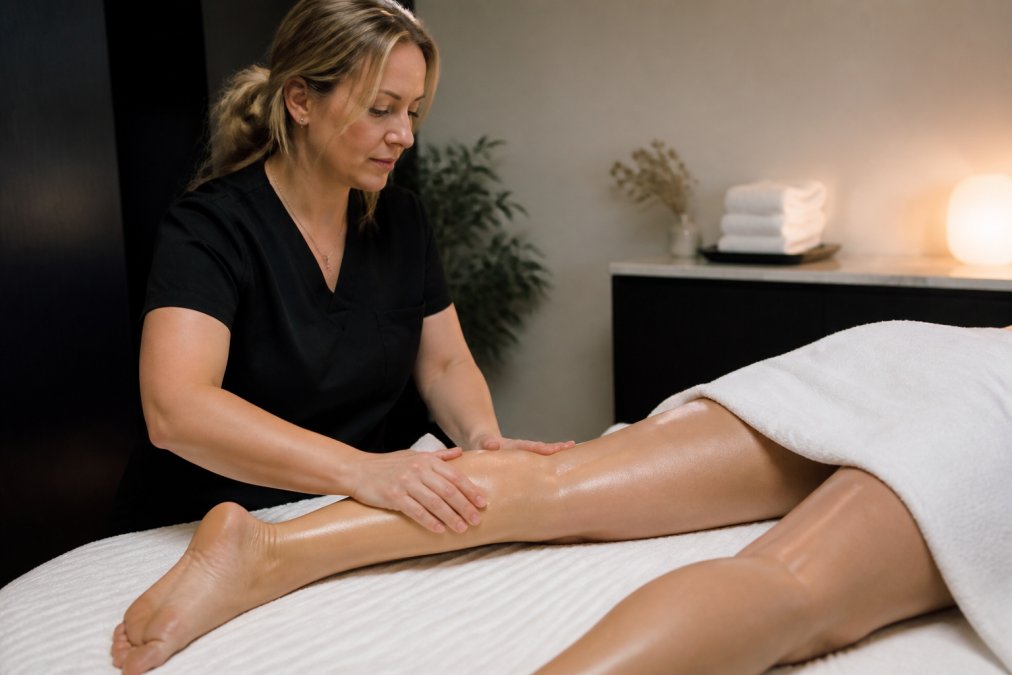
Post-surgical lymphatic massage is a gentle manual technique that moves excess fluid away from surgical sites toward lymph nodes for drainage, reducing swelling, easing discomfort, and protecting the contour your surgeon created.
What a Session Involves
Sessions typically run 60 to 90 minutes. Your therapist reviews your surgery type and stage of healing, then works in a sequence following your lymphatic system.
When to Start and How Often to Go
Many surgeons clear patients for lymphatic massage within days of surgery, but timing depends on your procedure and your surgeon’s instructions. Never book without that clearance.
Out-of-town patients often book sessions back-to-back during a single visit. Ask about scheduling several appointments in one trip so you are not flying home mid-protocol.
Fibrosis Treatment After Surgery: What Actually Works
Fibrosis is hard, fibrous scar tissue that forms under the skin after surgery, feels like firm lumps or ridges, and can distort your surgical result if untreated.
Manual Techniques and Technology
Effective fibrosis treatment combines hands-on work with supporting technology. Manual techniques break down adhesions and restore smooth tissue, while red light therapy and ultrasound support circulation and tissue softening.
Aggressive massage on fibrotic tissue too early can increase inflammation and make the problem worse. Treatment should be progressive, not forceful.
Compression Garment Fitting and Why It Matters
Compression garment fitting is selecting and adjusting a post-surgical garment so it applies even, correct pressure across healing areas. A poor fit causes indentations, uneven swelling, and skin irritation.
Understanding Post-Op Care Cost and What You’re Paying For
Post-op care cost is the most-asked question patients have, and the one most providers dodge. Pricing is built from four variables: session length, treatment modality, number of visits your protocol requires, and whether the provider is a licensed medical professional or a non-medical caregiver. Those four inputs explain almost every price difference between two quotes for the same surgery.
What Drives the Price Up or Down
- Session length. A 60-minute session is the floor; 90-minute sessions for full-body procedures (tummy tuck, BBL, 360 lipo) are common and priced higher.
- Modality stack. Manual lymphatic drainage alone is one price. Adding red light therapy, ultrasound, or compression garment fitting raises the per-session rate.
- Visit frequency. Early recovery is front-loaded, two to three sessions per week for the first two to three weeks is a common pattern, tapering to weekly and then as-needed.
- Provider credential. A registered nurse (RN) or licensed massage therapist (LMT) with post-surgical training commands a higher rate than a non-medical companion or home aide, because the scope of what they can legally do is different.
- Location of care. In-home visits typically carry a travel premium over a fixed recovery suite or spa treatment room.
Insurance and Financing Guidance
Most elective cosmetic surgery recovery care is not covered by health insurance, because the original procedure is typically elective and the recovery care is considered cosmetic follow-up. Plan your budget around that default.
- Call the member services number on the back of your insurance card.
- Ask specifically whether manual lymphatic drainage is a covered benefit under your plan.
- Give them the diagnosis code your surgeon’s office will use and ask them to confirm coverage under that code.
- Ask whether a physician’s order or prior authorization is required, and how long that takes.
- Request the answer in writing or note the representative’s name and reference number.
For financing, three routes are common:
- Health Savings Account (HSA) or Flexible Spending Account (FSA). If your plan allows it and the service qualifies as a medical expense, you can pay with pre-tax dollars. Confirm eligibility with your plan administrator before assuming it qualifies.
- Provider payment plans. Many recovery providers offer installment plans; ask about the terms, any interest, and whether a deposit is required to hold your surgery-week slots.
- Medical financing cards. Third-party medical credit cards are widely accepted in the recovery space. Read the promotional-period terms carefully, deferred-interest offers can retroactively charge interest if the balance is not paid in full.
Do not assume a provider accepts insurance just because they ask for your insurance card. Many recovery providers collect it for records only and bill you privately. Ask directly: “Are you in-network with my plan, or is this self-pay?”
Questions to Ask Before You Sign
- What is included in the quoted session price, manual work only, or manual plus red light, ultrasound, and garment fitting?
- How many sessions does my specific procedure typically require, and what is the total estimated cost at that count?
- Is there a package rate for booking multiple sessions up front, and is it refundable if my surgeon changes my protocol?
- What is your cancellation policy if my surgery date moves?
- Do you offer a payment plan, and what are the terms?
Get a written estimate that lists the per-session rate, the recommended number of sessions, and the total. A provider who will not put a number in writing is telling you something about how they handle the rest of your care.
Pre-Op Preparation Checklist for a Smoother Recovery
Preparing before surgery makes recovery measurably easier. The patients who struggle most in week one set nothing up in advance, no ride home, no correctly sized compression garment, no food, no provider booked. Set up your home, support, and provider before you go under, not after.
Two to Four Weeks Before Surgery
- Confirm your surgery date and expected recovery timeline with your surgeon’s office in writing. Ask how many days you will be fully dependent on someone else, and how many weeks until you can drive, lift, or return to work.
- Interview and book your post-op care provider. Do this now, not after surgery. Surgery-week slots at reputable providers fill up, and you will not want to be making calls while on pain medication.
- Verify the provider’s credentials. Ask for their state license number and confirm it through the appropriate state licensing board. Ask how many post-surgical clients they treat per week and whether they have specific training in drain management and fibrosis treatment.
- Get a written post-op protocol from your surgeon that your recovery provider can follow. This should specify when lymphatic massage can begin, which areas to avoid, and any movements that are restricted.
- Purchase your compression garment and confirm sizing with your surgeon. Do not guess your size. A garment that is too tight restricts circulation; one that is too loose does nothing. Buy two if your surgeon recommends it, so you have a clean one while the other is washed.
- Arrange transportation home from surgery and to your first follow-up appointments. You will not be able to drive, and many surgeons will not release you to a rideshare without an escort.
- Line up your at-home support. Identify one person who can stay with you for at least the first 24 to 48 hours, help you to the bathroom, and monitor you for warning signs.
One Week Before Surgery
- Stock easy-to-prepare, low-sodium foods for the first two weeks. Think rotisserie chicken, eggs, Greek yogurt, canned tuna in water, frozen vegetables, and bone broth. High-sodium meals cause fluid retention that works directly against your lymphatic drainage sessions.
- Fill prescriptions in advance, pain medication, antibiotics, anti-nausea medication, and stool softeners. Constipation from pain medication is one of the most common and most avoidable post-op complaints.
- Set up a medication schedule with alarms on your phone. Log every dose with the time taken so you do not double up or miss a dose.
- Place extra pillows for elevation and positioning. A wedge pillow and a few firm pillows under the legs or torso make a real difference in swelling and comfort.
- Save your surgeon’s after-hours contact number and the number for your recovery provider in your phone under names you can find while groggy.
- Prep your recovery space. Set up a charging station near where you will sleep, move frequently used items to waist height so you are not reaching overhead, and clear a path to the bathroom.
Day Before Surgery
- Confirm your ride and your recovery provider’s first session time.
- Shower and wash your bedding with a fragrance-free detergent if your surgeon has given skin-prep instructions.
- Lay out loose, front-closing clothing, button-up shirts, zip-front hoodies, and slip-on shoes. You will not be able to pull a t-shirt over your head.
- Charge your phone and any devices, and set out your ID, insurance card, and surgery paperwork.
- Eat and drink only what your surgeon allows. Most require fasting after midnight; follow their instructions exactly.
In-Home vs. Recovery House Setup
Where you recover matters as much as who helps you. Two common options:
- In-home recovery. You recover in your own bed with a caregiver or a visiting nurse. Best for patients with a reliable support person, a ground-floor bedroom or elevator access, and a short drive to their surgeon. The trade-off is that you are responsible for coordinating everything.
- Recovery house or aftercare suite. You stay at a facility staffed by nurses or trained caregivers, often with 24-hour coverage, meals, and transportation to follow-up appointments. Best for out-of-town patients, patients who live alone, and patients whose surgeon requires closer monitoring. The trade-off is cost and being away from home.
If you are traveling in for surgery, book your recovery house and your post-op massage sessions back-to-back before you arrive. Out-of-town patients often schedule several appointments in a single trip so they are not flying home mid-protocol.
The single highest-value pre-op action is booking your recovery provider before surgery. Everything else on this list can be handled in a day; provider availability cannot.
Nutritional Recovery Plans to Reduce Swelling and Support Healing
Food affects how fast you heal and how much you swell. A recovery-focused plan prioritizes protein, hydration, and anti-inflammatory foods while cutting sodium and processed sugar.
Frequently Asked Questions
What should I look for when choosing a post-op recovery center?
Check for state licensure, surgeon referrals, and experience with your specific procedure. In Florida, massage therapists must hold a valid state license (verify at floridashealthsource.gov). Ask whether the therapist has advanced training in post-surgical lymphatic massage and fibrosis treatment after surgery. Look for a provider who communicates with your surgeon and offers a private setting. Vetting standards matter more than price alone.
How does lymphatic drainage massage help with post-op recovery?
Post-surgical lymphatic massage moves accumulated fluid away from surgical sites, which can reduce swelling and support faster healing. It also helps prevent fibrosis, the hard lumps that can form when fluid sits too long. Many surgeons refer patients for sessions starting within days of surgery, though timing depends on your procedure and your surgeon’s instructions. A trained therapist adjusts pressure and technique to your stage of recovery.
How many post-surgical lymphatic massage sessions will I need?
Session count varies by procedure, swelling severity, and how quickly your body responds. Some patients see meaningful change in a few sessions; others need a longer series. If you are traveling to Fort Lauderdale, ask whether sessions can be scheduled on consecutive days so you can complete a concentrated course before flying home. Your therapist should reassess at each visit and adjust the plan.
What does post-op care cost include, and can I use insurance?
Post-op care cost typically covers the therapist’s time, technique, and any technology used during your session. Elective cosmetic recovery is generally not covered by health insurance, though some plans may cover medically necessary lymphatic drainage after certain procedures. Ask your insurer directly. Many providers offer package pricing for multiple sessions. Contact the provider for current rates and financing options.
Recovering from cosmetic surgery takes patience, and the right support makes the process safer and more comfortable. At Reviv Spa, our Florida-licensed team provides Brazilian lymphatic drainage, advanced fibrosis treatment with red light therapy and ultrasound, and personalized recovery protocols in a private, women-only setting trusted by top plastic surgeons in Florida. Get started with Reviv Spa and give your results the recovery care they deserve.