

Table of Contents
- Can You Fly Home After Tummy Tuck Surgery? The Short Answer
- How Soon Can You Fly After a Tummy Tuck?
- Blood Clot Risk After Surgery and Flying: What You Need to Know
- When Can You Travel After a Tummy Tuck? Recovery Milestones to Watch
- Your Post-Surgery Travel Checklist: Day-by-Day Readiness
- If You Must Fly Sooner: Managing an Unavoidable Trip Home
- Planning Your Recovery in Fort Lauderdale: Next Steps with Reviv Spa
- Frequently Asked Questions
Last Updated: October 28, 2026
Can You Fly Home After Tummy Tuck Surgery? The Short Answer
Yes, most women can fly home after a tummy tuck, but not right away. The honest answer is that no single timeline fits everyone, and the decision belongs to the surgeon who performed the operation. According to the American Society of Plastic Surgeons, recovery guidance after abdominoplasty varies with the extent of surgery and each patient’s health history.
Below, you’ll find the milestones surgeons watch, the clot risk that makes early flying a concern, and a day-by-day checklist to prepare. The single most important rule: your own surgeon’s clearance outranks any general timeline you read online.
Can you fly home after tummy tuck surgery is really two questions. First, when is it medically safe? Second, how do you plan the trip so recovery stays on track?
Why Your Surgeon’s Clearance Matters More Than Any General Rule
Surgeon clearance is the deciding factor in every case. A tummy tuck is major surgery. It can affect mobility and healing.
Your surgeon knows your procedure details, your risk factors, and how your incisions are progressing. A general article cannot see any of that.
Ask your surgeon directly: “Am I cleared to fly, and what should I watch for?” Get the answer in writing if you can.
If you are weighing whether professional recovery support makes travel safer, this overview of the benefits of professional post-op care after surgery explains how guided care fits into the early weeks.
How Soon Can You Fly After a Tummy Tuck?
The exact window depends on the procedure and the person. Ask your surgeon when it is appropriate for you to fly.
Sitting still for hours can raise clot risk. Ask your surgeon about the risks and timing that apply to you.
Your surgeon’s number is the only one that counts for you.
Short-Haul vs. Long-Haul Flights: What Changes
Flight duration affects how long you may be seated. Ask your surgeon how your flight length affects your personal clearance date.
Ask your surgeon what precautions, if any, are appropriate for your flight.
Ask your surgeon how flight length affects your personal clearance date. A two-hour hop and a cross-country trip are not the same test of the body.
Blood Clot Risk After Surgery and Flying: What You Need to Know
Surgery and immobility can raise the chance of deep vein thrombosis (DVT), a clot that forms in a deep leg vein (the CDC). Ask your surgeon about your individual risk.
Long periods seated during a flight can mean more immobility. Discuss the risks of travel after surgery with your surgeon.
The CDC guidance on venous thromboembolism notes that long periods of sitting increase clot risk and that movement helps. After abdominoplasty, movement is limited, so timing matters more.
Ask your surgeon which precautions are appropriate for you, and follow their instructions.
Warning Signs of DVT and When to Seek Emergency Care
Know the signs before you travel. Seek urgent medical care for:
- Swelling in one leg, especially the calf
- Pain or tenderness in the leg that does not ease
- Warmth or redness in the skin
- Shortness of breath
- Chest pain or a fast heartbeat
- Sudden dizziness or fainting
Shortness of breath and chest pain can signal a clot that has traveled to the lungs. That is an emergency. Call 911 or go to the nearest emergency room.
Do not wait to see if it passes. Early treatment matters.
Know the warning signs of a clot before you travel, and treat the serious ones as an emergency.
| Warning sign | What it may signal | What to do |
|---|---|---|
| Swelling in one leg, especially the calf | Possible deep vein thrombosis | Seek urgent medical care |
| Pain or tenderness in the leg that does not ease | Possible deep vein thrombosis | Seek urgent medical care |
| Warmth or redness in the skin | Possible deep vein thrombosis | Seek urgent medical care |
| Shortness of breath | Clot that has traveled to the lungs | Call 911 or go to nearest emergency room |
| Chest pain or a fast heartbeat | Clot that has traveled to the lungs | Call 911 or go to nearest emergency room |
| Sudden dizziness or fainting | Clot that has traveled to the lungs | Call 911 or go to nearest emergency room |
When Can You Travel After a Tummy Tuck? Recovery Milestones to Watch
When you can travel after a tummy tuck depends on your individual recovery. Ask your surgeon what factors they will consider before clearing you to fly.
If swelling is still a struggle, these ways to reduce swelling after tummy tuck can help you manage it before travel day.
Your Post-Surgery Travel Checklist: Day-by-Day Readiness
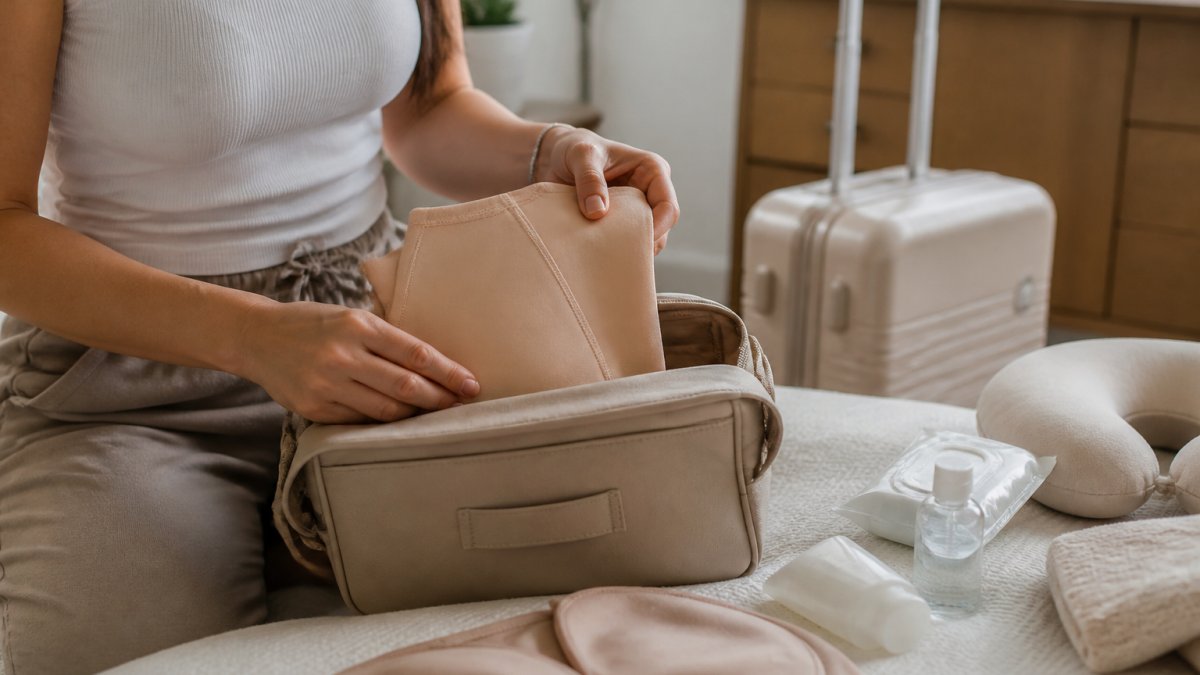
Use this checklist to prepare questions for your surgeon and consider airport and in-flight logistics for a post-abdominoplasty trip.
The Readiness Criteria Surgeons Actually Weigh
Before you book a flight, discuss your readiness and any concerns with your surgeon. Your surgeon can advise you based on your procedure, recovery, and individual risk factors.
One Week Before (If Cleared)
- Ask your surgeon what travel preparations are appropriate for you
Day Before
- Confirm your travel plans with your surgeon
Travel Day: Airport and In-Flight Logistics
Airport logistics are worth considering when planning travel after surgery.
Ask your surgeon what airport and in-flight arrangements are appropriate for your recovery.
After You Land
- Follow your surgeon’s instructions after you arrive
If swelling is still a struggle before travel day, these ways to reduce swelling after tummy tuck can help you manage it. And because rest matters as much as movement, these tips on how to sleep comfortably after tummy tuck surgery help you protect your recovery on both ends of the trip.
If You Must Fly Sooner: Managing an Unavoidable Trip Home
If you are considering travel after surgery, discuss the timing and risks with your surgeon before making plans.
Ask your surgeon whether travel is appropriate and what guidance applies to your situation.
Build the Plan Around Five Elements
Discuss any proposed travel plan with your surgeon, including whether you need assistance and what to do if you have concerns while away.
Emergency Planning While Away From Your Surgeon
If you will be away from your surgeon, ask what to do if you have concerns during your recovery.
Seek emergency care immediately, call 911 or go to the nearest emergency room, for shortness of breath, chest pain, a fast heartbeat, sudden dizziness or fainting, or swelling and pain in one leg. These can signal a blood clot that has traveled to the lungs, which is a medical emergency. Do not wait to see if it passes.
For concerns during recovery, contact your surgeon for guidance.
If You Are Planning Recovery Support Before You Fly
If you are facing an early trip and want recovery support arranged before you fly, contact the Reviv Spa team to discuss options. The team works alongside your surgeon’s guidance rather than replacing it, and can help you think through timing and comfort as you plan.
Planning Your Recovery in Fort Lauderdale: Next Steps with Reviv Spa
Recovery after a tummy tuck takes patience, and travel adds another layer of planning. The safest path is simple: follow your surgeon’s clearance, watch for warning signs, and build support around your healing.
Reviv Spa specializes in post-operative care, including Brazilian lymphatic drainage and personalized recovery care for women recovering from tummy tucks, liposuction, Lipo 360, and BBL procedures.
Every recovery is different. A consultation is the best way to see how professional post-op care fits your timeline.
Frequently Asked Questions
How soon can you fly after abdominoplasty surgery?
The timing depends on your procedure, recovery, and individual risk factors. Get explicit clearance from your surgeon before booking travel.
What are the risks of flying too soon after a tummy tuck?
Discuss the risks of flying after a tummy tuck with your surgeon, and follow their guidance about when to travel.
Should someone accompany you on a flight after tummy tuck surgery?
Ask your surgeon whether you should have assistance during your flight. Inform your surgeon of your travel plans so they can provide advice specific to your situation.
What symptoms after surgery mean you should not fly?
Ask your surgeon what symptoms or concerns should affect your travel plans. If you have a medical concern, contact a qualified medical professional.
Flying home after a tummy tuck is possible, but it should never be rushed. The right timing comes from your surgeon, your healing, and a plan that puts safety first. Reviv Spa supports women through post-operative recovery with individualized lymphatic drainage, swelling management, and a private, women-focused setting. Get started with Reviv Spa and give your recovery the support it deserves.
