

Table of Contents
- What to Look for in a Reputable Post-Surgical Care Clinic
- Post-Operative Care Provider Questions to Ask Before You Book
- What Post-Surgical Lymphatic Massage Can and Cannot Do
- Clinic-Based Follow-Up vs. In-Home Recovery Support
- Choosing a Post-Op Recovery Clinic in Fort Lauderdale
- Red Flags, Costs, and Patient-Safety Safeguards
- Conclusion
- Frequently Asked Questions
Last Updated: October 9, 2026
What to Look for in a Reputable Post-Surgical Care Clinic
Finding a reputable clinic for post-surgical care in South Florida starts with one habit: ask for proof before you book.
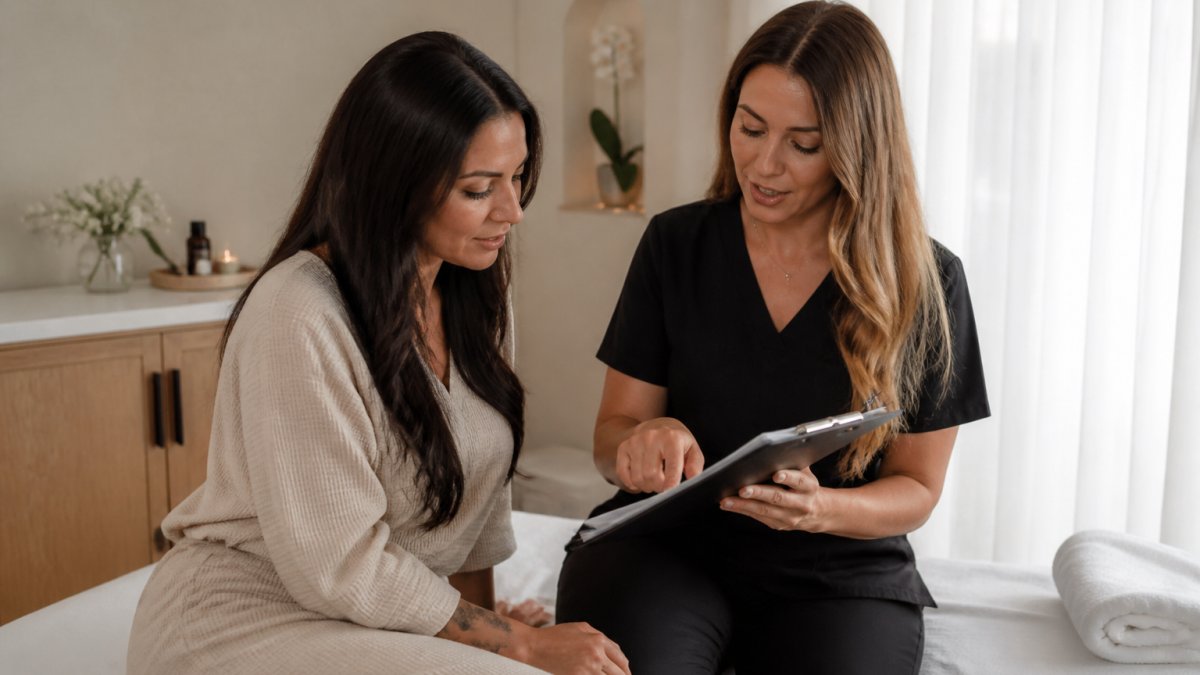
Post-surgical care is the hands-on support that helps a body heal after an operation: lymphatic massage, swelling management, wound monitoring, and safe movement guidance.
This guide from Reviv Spa covers the exact questions to ask, how to check credentials, and how clinic-based follow-up compares with in-home recovery support.
Licensing, Credentials, and Scope of Services
Start with the state license. In Florida, massage therapists are licensed through the Florida Department of Health, and that license number can be checked in the state’s public database. Ask for it in writing, then look it up yourself.
Scope matters just as much as the license. A recovery clinic should be able to state plainly what it handles and what it refers out. Common scope items include:
- Manual lymphatic drainage and post-surgical massage
- Swelling and fluid management support
- Fibrosis-focused treatment for hardened tissue
- Non-surgical body contouring and wellness add-ons
Anything involving wound care, medication, or clinical monitoring belongs to a nurse or physician, not a spa. A provider who blurs that line is a provider to skip.
Surgeon Referrals and Clinical Coordination
The strongest signal of a good clinic is a working relationship with plastic surgeons.
Ask two questions: does the clinic communicate with your surgeon’s office about your progress, and will they send you back to your surgeon if something looks off?
Good coordination means the clinic follows your surgeon’s instructions, not a one-size-fits-all protocol. Every procedure heals differently, and your surgeon’s clearance sets the pace.
Post-Operative Care Provider Questions to Ask Before You Book
The fastest way to separate a careful provider from a careless one is a short list of questions, and a clear sense of what a weak answer sounds like. Ask these before you book, and write the answers down so you can compare providers side by side.
Credentials and Scope
- What license does the therapist hold, and what is the license number? In Florida, massage therapists are licensed through the Florida Department of Health, and you can verify a license in the state’s public database.
- How many years has the team worked with post-op patients, and with which procedures?
- What training do they have in manual lymphatic drainage and fibrosis-focused care?
- Which services fall outside their scope? Anything involving wound care, medication management, or clinical monitoring should be referred to a nurse or physician.
Safety, Supervision, and Escalation
- Who supervises the therapist, and is a clinician available for questions during or after a session?
- What are your stop rules if I feel unwell, dizzy, or in pain during a session?
- What symptoms would make you send me to my surgeon or to urgent care?
- What is your after-hours process if something changes overnight?
- Do you carry liability insurance, and can I see proof?
A provider who cannot answer the escalation questions clearly is not set up for post-surgical care, however nice the treatment room looks.
Coordination With Your Surgeon
- Will you communicate with my surgeon’s office about my progress?
- Will you follow my surgeon’s written instructions rather than a standard protocol?
- Can you share what you send to my surgeon and how often?
Good coordination means the clinic follows your surgeon’s guidance, not a one-size-fits-all plan. Your surgeon’s clearance sets the pace.
Logistics and Fit
- How many sessions do patients typically schedule, and how far apart?
- Can sessions be done back-to-back if I am traveling in for surgery?
- What is your cancellation and rescheduling policy if my surgeon changes my plan?
- Do you treat patients with my specific procedure?
- Is the environment private and women-focused?
What a Weak Answer Looks Like
Listen for deflection. Vague answers about licensing, reluctance to put anything in writing, or a refusal to coordinate with your surgeon are all signals to keep looking, as is any promise of a guaranteed result.
Ask whether the therapist has handled your exact procedure before. Recovery after a BBL and recovery after a tummy tuck call for different pressure, positioning, and timing. A general massage background is not the same as procedure-specific experience.
If a provider pressures you into a large prepaid package before your first visit, or cannot explain what happens if you feel unwell mid-session, treat that as a stop sign. Post-surgical care requires a plan for when things go wrong, not just when they go right.
What Post-Surgical Lymphatic Massage Can and Cannot Do
Post-surgical lymphatic massage is a gentle manual technique that encourages fluid movement after surgery. It can help reduce swelling, ease tightness, and support comfort during recovery, but it cannot replace medical care or guarantee a specific outcome.
Here is the honest split.
What it can support:
- Less post-surgical swelling and bloating
- Softer, more flexible tissue as healing progresses
- Relief from postural tension and discomfort
- A calmer nervous system during a stressful stretch
What it cannot do:
- Guarantee that fibrosis or swelling disappears
- Replace wound care, medication, or medical monitoring
- Fix a complication that needs a surgeon’s review
- Promise a particular aesthetic result
Anyone who promises guaranteed healing is overselling. Progress varies by person, procedure, and how closely surgeon guidance is followed.
When to Start and Who Clears You
Only your surgeon clears you to start. Many surgeons allow gentle lymphatic work within the first weeks after surgery, while others prefer to wait longer depending on the procedure and how you are healing.
Call your surgeon’s office and ask directly: when can I begin lymphatic massage, and are there any restrictions? Bring that answer to your first appointment. A good clinic will ask for it before starting.
Never book a massage, lymphatic or otherwise, without your surgeon’s clearance. Starting too early, or with the wrong technique, can irritate healing tissue and set your recovery back. When in doubt, wait and ask.
Clinic-Based Follow-Up vs. In-Home Recovery Support
Clinic-based follow-up and in-home recovery support solve different problems, and most patients need a mix of both. The right choice depends on your mobility, how far you traveled for surgery, how much hands-on help you need at home, and your surgeon’s discharge instructions.
What Each Setting Is Built For
Clinic-based care gives you specialized equipment, a controlled treatment space, and a therapist who can adjust pressure in real time. It suits ongoing lymphatic work, fibrosis-focused treatment, and tissue softening once you can travel comfortably.
In-home support brings help to your door. It matters most in the first days after discharge, when leaving the house is hard and daily tasks, bathing, dressing, moving safely, remembering medications, are the real challenge.
| Factor | Clinic-Based Follow-Up | In-Home Recovery Support |
|---|---|---|
| Best for | Ongoing lymphatic and fibrosis care | Early days after discharge |
| Setting | Private treatment room | Your own home |
| Typical provider | Licensed massage therapist | Nurse, home health aide, or caregiver |
| Typical focus | Swelling, tissue softening, contour support | Daily tasks, mobility, medication reminders, wound checks |
| Travel needed | Yes | No |
| Coordination | Direct with your surgeon’s office | Varies by provider and agency |
| Insurance | Usually out of pocket | Sometimes partially covered when ordered by a physician |
Care Coordination and Escalation After Discharge
Whichever setting you choose, the same coordination questions apply. Before your first session, confirm the provider has your discharge paperwork, your surgeon’s name and office number, and a written list of your medications and restrictions.
Ask how the provider communicates with your surgeon, often a short written update after each visit, plus a phone call if anything looks off.
Symptoms that generally warrant immediate medical attention, not a massage appointment, include chest pain, shortness of breath, a fever, sudden severe swelling in one leg, redness or warmth spreading from an incision, drainage that changes color or smell, or a wound that opens.
How to Sequence the Two
Many patients use both: in-home help covers the first stretch after discharge, then clinic visits take over once you can travel comfortably. If you flew in for surgery, plan your clinic sessions before you arrive; back-to-back appointments during a short stay are common, but your surgeon and therapist should agree on the spacing.
A simple sequence that works for many patients:
- Days 1-3 after discharge: in-home support for daily tasks, mobility, and medication reminders, with clinic care only if your surgeon clears it.
- First week or two: begin gentle clinic-based lymphatic work once your surgeon gives the go-ahead.
- Weeks 2-6 and beyond: continue clinic visits for swelling, tissue softening, and fibrosis-focused care, tapering as your body heals.
Timelines vary by procedure and by person. Your surgeon’s clearance, not a fixed schedule, sets the pace.
Ask any provider two questions before you book: How do you communicate with my surgeon, and what is your plan if something looks wrong? Clear answers to both are the strongest sign you have found the right setting for your recovery.
Choosing a Post-Op Recovery Clinic in Fort Lauderdale
Location matters too. If you are recovering in Broward County, a clinic within easy reach of your hotel or home keeps travel short and stress low.
At Reviv Spa, care centers on Brazilian lymphatic drainage, fibrosis-focused treatment, and individualized recovery plans.
One detail worth asking about anywhere: does the therapist adjust the plan as you heal? Recovery is not static.
Red Flags, Costs, and Patient-Safety Safeguards
Watch for pressure tactics. A clinic that pushes a large prepaid package before your first visit, promises guaranteed results, or refuses to share license details is showing you its priorities.
Red flags to walk away from:
- No license number available on request
- Guarantees about healing, fat survival, or fibrosis outcomes
- No interest in your surgeon’s instructions
- No clear answer on what they refer out
- Sessions that ignore your pain or comfort signals
Safety safeguards to confirm:
- A written intake that includes your procedure and surgeon’s guidance
- Clear stop rules if you feel unwell during a session
- A plan for when to contact your surgeon
- Private, clean, well-equipped treatment space
Pricing varies by session length, treatment type, and how many visits your recovery needs. Reputable clinics give a clear quote up front and explain what is included, and will adjust packages if your surgeon changes your plan.
The three questions that matter most: What is your license number? Does your plan follow my surgeon’s instructions? What happens if something looks wrong? Clear answers to all three are the strongest sign you have found the right provider.
Conclusion
Recovery goes more smoothly when the people helping you are licensed, transparent, and willing to work with your surgeon. That combination is worth more than any promise of a perfect result.
Reviv Spa supports women through post-operative recovery with Brazilian lymphatic drainage, fibrosis-focused treatment, and personalized care in a private, women-focused setting. If you are healing in Fort Lauderdale or traveling in for surgery, the team can help you plan sessions around your surgeon’s guidance and your schedule.
Explore Reviv Spa’s post-operative recovery services and book a consultation to build a plan that fits your healing timeline.
Frequently Asked Questions
What should I look for in a post-surgical care clinic?
Look for verified state licensure, a clear scope of services, and a team trained specifically in post-operative recovery. Ask whether the clinic coordinates with your surgeon, how it handles complications or escalation, and whether it treats your specific procedure, such as tummy tuck or liposuction. A reputable post-surgical care clinic will welcome these questions and never promise guaranteed outcomes.
What questions should I ask a post-op recovery provider before booking?
Ask about credentials and licensure, session protocols, how many visits are typically recommended, and what happens if you develop a concern like fever, unusual pain, or wound drainage. Also ask whether the provider will communicate with your surgeon and how they document your progress. Clear, specific answers are a good sign; vague or evasive ones are not.
How do I know whether a post-surgical lymphatic massage provider is right for me?
Start with your surgeon’s clearance, since timing depends on your procedure and healing stage. Then confirm the provider’s training in post-surgical lymphatic massage, not general relaxation massage. Ask how they assess swelling and fibrosis, what techniques they use, and whether they adjust for your comfort. If anything feels rushed or generic, keep looking.
Are surgery recovery homes legal in Florida, and should I use one?
Recovery residences operate under different rules than clinics, and legality depends on how they are licensed and staffed. Before booking any recovery residence, verify its licensing status with the state and confirm whether medical supervision is provided. For clinical needs like wound monitoring or medication management, work with licensed providers and follow your surgeon’s guidance rather than relying on an unverified facility.