

Table of Contents
- Understanding Fibrosis After Abdominoplasty
- Identifying Hard Lumps After Tummy Tuck
- Massage for Fibrosis After Tummy Tuck: Techniques and Timing
- How Long Does Fibrosis Last After Tummy Tuck?
- Seroma After Tummy Tuck Symptoms and Management
- Professional and At-Home Treatment Options
- When to Consult Your Surgeon
- Frequently Asked Questions
Last Updated: October 11, 2026
Understanding Fibrosis After Abdominoplasty
Fibrosis after a tummy tuck is the buildup of scar tissue that hardens beneath the skin. This natural part of healing can create firm areas, lumps, or an uneven texture across the surgical site. Understanding what causes it and how to treat fibrosis after tummy tuck helps recovery feel less alarming and more manageable.
The body forms collagen-rich tissue to seal the wound, which usually resolves within months. Sometimes the tissue becomes overly dense or stiff, creating hard knots and firmness that concern patients during recovery.
What Causes Hardened Tissue After Surgery
Fibrosis develops when the body produces excess collagen during healing. The horizontal incision across the lower abdomen requires tissue to knit back together, and this inflammatory response can occasionally overshoot, leaving thickened, fibrous areas instead of smooth skin.
Several factors influence how much fibrosis forms:
- Surgical technique and how tissue layers were handled
- Individual healing response and genetics
- Activity level during early recovery
- Fluid buildup or seroma formation
- Lack of proper lymphatic drainage support
- Tension on the incision or repeated stretching during healing
Normal Healing vs. Fibrosis: How to Tell the Difference
In the first two weeks after surgery, swelling and firmness are normal acute post-operative response, not fibrosis.
By weeks three to four, swelling should decrease and tissue should feel softer. If firmness persists or worsens after the first month, fibrosis may be developing.
Key differences to watch:
| Symptom | Normal Healing | Possible Fibrosis |
|---|---|---|
| Timeline | First 2-4 weeks | Persists beyond 6-8 weeks |
| Texture | Soft swelling that decreases | Hard lumps or dense areas |
| Location | Diffuse across surgical area | Localized firm knots |
| Response to massage | Gradually softens | Slow to respond or unchanged |
| Color | Bruised or pink | May be normal skin color |
Normal healing responds to movement, massage, and time. Fibrosis feels like a hardened lump that doesn’t soften easily with light pressure.
Identifying Hard Lumps After Tummy Tuck
Hard lumps beneath the skin can feel alarming, but not all firmness is fibrosis. Understanding what you’re feeling and when to contact your surgeon is essential for safe recovery.
Fibrosis vs. Seroma vs. Hematoma: What’s the Difference?
Fibrosis is dense, organized scar tissue that feels like a firm knot along or near the incision line.
Seroma is a collection of clear fluid that pools beneath the skin when lymphatic vessels are disrupted. It feels soft, squishy, or fluctuant, like a water balloon under the skin.
Hematoma is a collection of blood that feels firm or hard, is often painful, and may show significant bruising. Small hematomas reabsorb naturally; large ones may need drainage.
Infection presents with warmth, redness, increasing swelling, drainage, fever, or chills. It requires immediate medical attention.
How to Assess What You’re Feeling
When you notice a lump, consider: When did it appear? (Fibrosis weeks 2-8; seroma/hematoma weeks 1-2; infection anytime). What does it feel like? (Fibrosis: firm; seroma: soft/squishy; hematoma: hard with bruising; infection: warm/tender). Is the skin discolored? (Bruising suggests hematoma; redness suggests infection). Is there drainage? (Clear/bloody may indicate seroma/hematoma; pus indicates infection). Do you have fever or chills? (Suggests infection, not fibrosis).
Fibrosis Symptoms and Red Flags
Fibrosis typically presents with firmness or hardness that doesn’t improve with rest, visible lumps along the incision line, tightness or pulling sensation when bending, uneven skin texture, mild discomfort during movement, and gradual onset over weeks two to eight post-op.
Red flags that warrant immediate surgeon contact:
- Sudden increase in swelling or pain (may indicate hematoma, seroma, or infection)
- Redness, warmth, or drainage from the incision (infection risk)
- Fever or chills (infection)
- Severe pain that doesn’t improve with rest or prescribed medication
- Skin breakdown, opening of the incision, or pus
- Numbness that spreads, worsens, or is accompanied by tingling or burning
- Swelling that increases after the first two weeks instead of decreasing (seroma)
- A soft, fluctuant bulge that grows larger (seroma requiring drainage)
If any red flag appears, contact your surgeon right away. These may indicate complications requiring medical attention, imaging, or drainage, not something home care or massage can address.
When to Seek Reassurance vs. When to Seek Treatment
Firmness in the first two to three weeks is almost always normal post-operative swelling and inflammation, not fibrosis. Patience is appropriate. However, if firmness persists, worsens, or is accompanied by any red-flag symptom beyond the first month, professional evaluation is warranted. Your surgeon can perform a physical exam, order ultrasound if needed, and determine whether the tissue is fibrosis, seroma, hematoma, or something else, and what treatment (if any) is appropriate for your specific situation.
Massage for Fibrosis After Tummy Tuck: Techniques and Timing
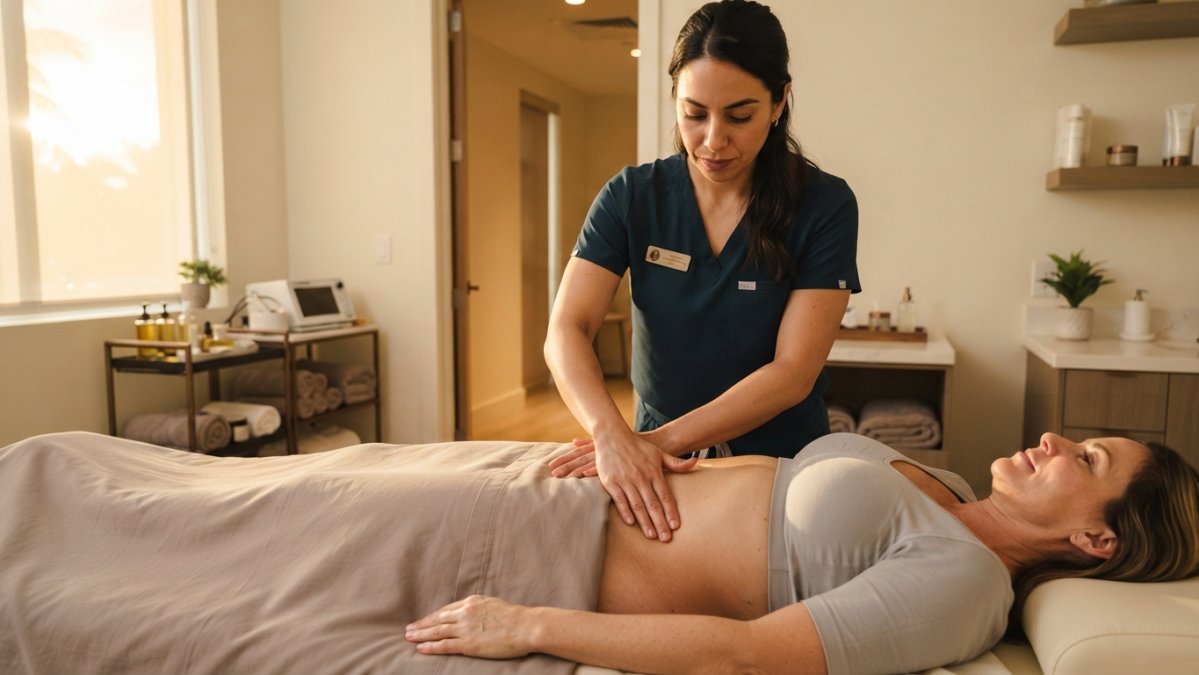
Manual lymphatic drainage and therapeutic massage are among the most effective ways to treat fibrosis after tummy tuck by breaking down dense tissue, improving circulation, and restoring skin texture.
Manual Lymphatic Drainage and Tissue Softening
Manual lymphatic drainage (MLD) uses gentle, rhythmic pressure to encourage fluid movement through the lymphatic system, reducing swelling and helping the body reabsorb stagnant fluid. Licensed massage therapists trained in post-operative care apply appropriate pressure without irritating healing tissue.
MLD reduces swelling, improves circulation, softens hardened tissue, enhances incision healing, and relieves tightness. Reviv Spa in Fort Lauderdale combines MLD with techniques tailored to each patient’s recovery stage, including Brazilian lymphatic drainage methods for post-surgical body contouring.
When to Start Massage and Safe Progression
Timing is critical. Most surgeons recommend waiting until the incision has begun to close (typically weeks 2-3) before superficial lymphatic drainage begins. Deep tissue work should wait until weeks 4-6, when the incision is fully closed and inflammation has subsided.
Safe progression: weeks 2-3 (light lymphatic drainage around surgical area), weeks 4-6 (gentle massage to sides and upper abdomen), weeks 6-8 (gradual pressure increase), week 8+ (intensive fibrosis-focused massage). Always follow surgeon clearance.
How Long Does Fibrosis Last After Tummy Tuck?
Patience is essential. Fibrosis doesn’t resolve overnight, but with proper treatment, especially professional lymphatic drainage, most patients notice meaningful softening within two to three months.
Seroma After Tummy Tuck Symptoms and Management
A seroma is a collection of clear fluid that accumulates beneath the skin and can contribute to firmness and prolonged swelling. Symptoms include fluid-filled bulges, persistent swelling, tightness, and occasional drainage. Small seromas often resolve with compression and time; larger ones may require drainage. Compression garments and gentle lymphatic drainage help prevent and manage seroma formation.
Professional and At-Home Treatment Options
Treating fibrosis after tummy tuck involves a combination of self-care and professional support. The goal is to soften tissue, maintain mobility, and support the body’s natural healing process. Understanding your options and what to expect helps set realistic expectations and guides treatment selection.
Compression Garments: Foundation of Recovery
Compression garments reduce swelling, support healing tissue, and help prevent excessive fibrosis by maintaining consistent pressure. Most surgeons recommend wearing compression for at least four to six weeks to encourage fluid drainage and prevent pooling.
Compression reduces swelling, minimizes fluid accumulation, supports tissue layers, aligns collagen fibers, and reduces fibrosis risk. Consistency matters, wear compression continuously for the first two to four weeks, then transition to daytime wear.
Light Activity and Self-Care
Light activity prevents fibrosis by encouraging lymphatic drainage and preventing stiffness. Walking at a comfortable pace can begin as soon as cleared by surgeon. Gentle stretching after the first few weeks, gradual return to normal movement over six to eight weeks, and avoiding heavy lifting for at least six weeks support recovery. Your surgeon will provide specific guidelines.
Manual Lymphatic Drainage and Therapeutic Massage
Manual lymphatic drainage (MLD) is a recognized treatment for post-operative fibrosis. It uses gentle, rhythmic pressure to encourage fluid movement through the lymphatic system, reducing swelling and helping the body reabsorb stagnant fluid.
MLD reduces swelling, improves circulation, softens hardened tissue, enhances incision healing, relieves tightness, and supports lymphatic function. Brazilian lymphatic drainage methods are a specialty at Reviv Spa in Fort Lauderdale.
Timing is critical. Most surgeons recommend waiting until the incision has begun to close (weeks 2-3) before massage begins. Progression: weeks 2-3 (light lymphatic drainage), weeks 4-6 (gentle massage to sides and upper abdomen), weeks 6-8 (gradual pressure increase), week 8+ (intensive fibrosis-focused massage).
Advanced Treatments: Radiofrequency, Laser, and Heat Therapy
When home care and massage alone don’t resolve fibrosis, professional treatments can accelerate softening and improve skin texture. These device-based therapies work by stimulating collagen remodeling and breaking down dense scar tissue.
Radiofrequency (RF) therapy uses controlled heat to stimulate collagen reorganization.
Device-based treatments increase blood flow, stimulate collagen reorganization, soften fibrous tissue, and improve skin texture. Radiofrequency and laser treatments have moderate evidence for post-operative fibrosis. Results vary based on severity, individual response, and consistency. Improvement develops gradually over weeks to months. Your surgeon can assess whether device-based treatment is appropriate for your situation.
Choosing a Treatment Approach
The best treatment plan depends on recovery stage, fibrosis severity, individual healing response, surgeon guidance, and timeline. Early recovery (weeks 2-4) focuses on compression and gentle lymphatic drainage; later recovery (week 6+) can incorporate intensive massage and device-based treatments. Reviv Spa combines manual lymphatic drainage with advanced technologies including red light therapy and ultrasound, tailored to each patient’s recovery timeline.
How Long Does Treatment Take?
Fibrosis typically begins to soften around weeks 6-8 with consistent self-care and massage. Most patients see significant improvement by three to four months. Complete resolution varies; some fibrosis may persist as slight firmness along the incision line, which is normal. Timeline depends on initial fibrosis severity, consistency of care, activity level, individual healing response, and whether professional treatment is pursued. With proper treatment, most patients notice meaningful softening within two to three months.
When to Consult Your Surgeon
Regular follow-up with the surgeon is essential throughout recovery. The surgeon can assess whether fibrosis is progressing normally or requires intervention.
Contact the surgeon if:
- Fibrosis worsens or doesn’t improve after eight weeks of proper care
- Swelling increases unexpectedly
- Pain becomes severe or changes character
- Signs of infection appear (fever, redness, drainage)
- The incision opens or shows signs of breakdown
- Numbness spreads or becomes concerning
The surgeon may recommend imaging, referral to a specialized post-operative care provider, or advanced treatment options if conservative care isn’t working.
Fibrosis after a tummy tuck is a normal part of healing, but it doesn’t have to derail recovery. If hardened tissue or persistent swelling is affecting your healing, professional guidance can make a real difference. The American Society of Plastic Surgeons provides evidence-based post-operative care guidelines to support optimal recovery outcomes.
Frequently Asked Questions
What are the hard lumps I have after tummy tuck surgery?
Hard lumps after tummy tuck often develop as fibrous tissue forms during healing. This fibrosis is your body’s natural response to surgical trauma. Lumps can feel like knots or firm areas beneath the skin and typically develop within the first few weeks after abdominoplasty. While some firmness is normal healing, persistent or enlarging lumps should be evaluated by your surgeon to rule out seroma or other complications. Manual lymphatic drainage and massage can help soften these areas over time.
Can massage help with fibrosis after a tummy tuck?
Yes, massage for fibrosis after tummy tuck can be a beneficial non-surgical treatment. Manual lymphatic drainage and targeted tissue massage improve circulation, reduce swelling, and gradually soften hardened fibrous tissue. Professional techniques applied during the appropriate healing phase, typically after initial wound closure, can accelerate tissue remodeling and improve skin texture and contour. Consistency matters: regular sessions produce better results than occasional treatments.
How long does fibrosis last after tummy tuck surgery?
Fibrosis timeline varies by individual and surgical extent. Most patients experience the most noticeable hardness in the first 3-6 months after abdominoplasty. With appropriate treatment, including massage, compression, and light activity, many see significant improvement by 6-12 months. Some firmness may persist beyond a year, especially in areas with more extensive tissue work. Your surgeon can provide a personalized timeline based on your specific procedure and healing response.
What are the symptoms of seroma after tummy tuck?
Seroma after tummy tuck symptoms include localized swelling, fluid accumulation under the skin, a soft or spongy feel (unlike the firmness of fibrosis), and sometimes warmth or mild discomfort in the affected area. Seromas typically develop within the first few weeks post-op and may feel like a balloon of fluid. Contact your surgeon immediately if you notice sudden swelling, increased pain, redness, or warmth, as some seromas require drainage. This is distinct from fibrosis, which develops more gradually and feels firm rather than fluid-filled.