

Table of Contents
- What Is Lymphatic Drainage Massage for BBL Recovery?
- How Many Lymphatic Massages After BBL?
- Post-Op Fibrosis Treatment: Stopping Hard Lumps Early
- Faja and Lymphatic Massage: Making Compression Work
- Self-Massage Techniques and Nutrition Support
- Contraindications and Red Flags to Watch For
- Frequently Asked Questions
Last Updated: September 17, 2026
What Is Lymphatic Drainage Massage for BBL Recovery?
Lymphatic drainage after a BBL is a recovery protocol, not a spa treatment. Timing, pressure, and sequence matter more than how relaxing the session feels.
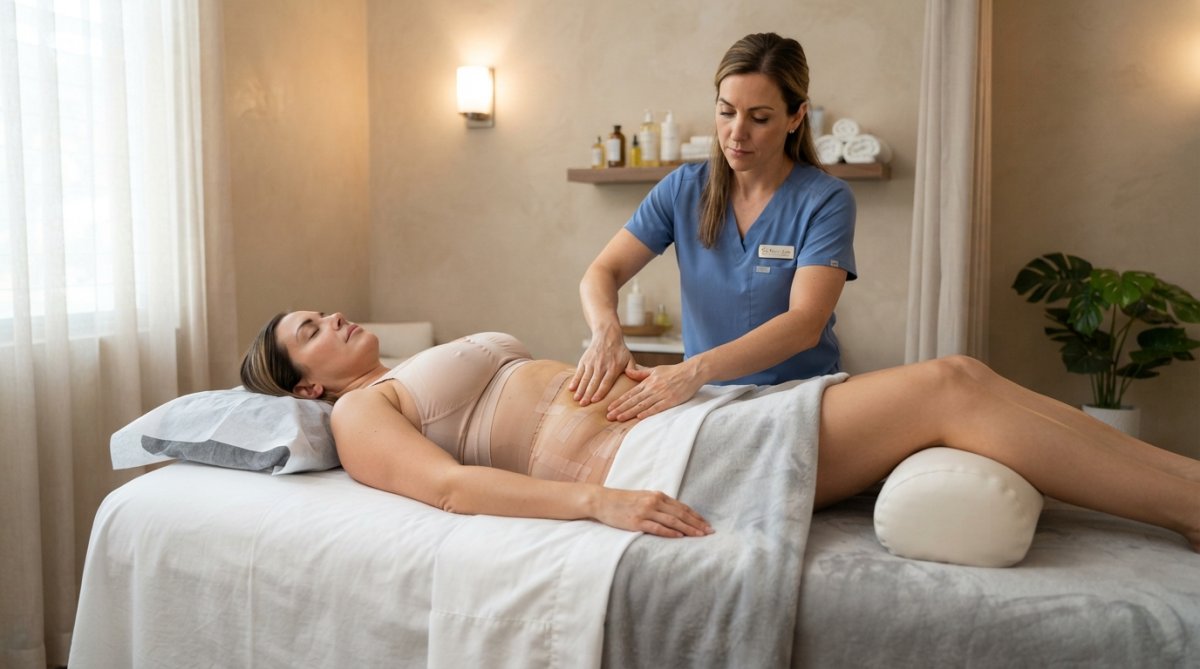
How Brazilian Lymphatic Drainage Differs
Brazilian lymphatic drainage is a more assertive style developed alongside the country’s high-volume cosmetic surgery culture. Where standard drainage uses feather-light pressure, the Brazilian approach combines directional strokes with soft tissue mobilization and later work on hardened tissue.
How Many Lymphatic Massages After BBL?
There is no single correct number. Most surgeons and post-op therapists work from a range: 8 to 20 sessions across the first two months, heaviest in the first two to three weeks. The exact count depends on four factors.
Sample Session Schedule
| Recovery Phase | Typical Frequency | Primary Goal |
|---|---|---|
| Days 1-7 | Daily to every other day | Move acute fluid, reduce edema, keep drains flowing |
| Weeks 2-3 | 2-3 times per week | Manage swelling, begin fibrosis prevention |
| Weeks 4-8 | 1-2 times per week | Address early hardening, protect contour |
| Beyond 8 weeks | As needed | Treat stubborn fibrosis, maintain results |
Treat the table as a starting point for a conversation, not a prescription. The number that matters is the one your surgeon and therapist agree on.
What Actually Changes the Count
A few scenarios show how much the answer varies:
- Drains still in place: Most therapists will not begin aggressive drainage until drains are out or output has dropped, since early vigorous work can interfere with the surgical plan, pushing your start date back several days.
- Early fibrosis detected: If a therapist finds a firm area at week two, the response is usually to increase frequency to two or three times per week and add modalities, not to wait.
- Long flight home: Air travel and prolonged sitting increase swelling in the legs and hips. Patients flying within the first two weeks are often advised to schedule a session the day before departure and again within a day or two of arriving home.
- Return to work: If your job involves sitting for long stretches, a session at the end of the workweek can offset the fluid that accumulates.
The Cost and Time Reality
A full protocol is a meaningful budget line, so ask about package rates, cancellation policies, and travel-week discounts before you book.
Ask your surgeon’s office for a written session recommendation before you book anything. A therapist who asks to see that recommendation before starting is a good sign, it means they are treating your recovery as a medical protocol, not a spa service.
Post-Op Fibrosis Treatment: Stopping Hard Lumps Early
Fibrosis is the formation of firm, fibrous tissue under the skin at a surgical site. It feels like a hard lump or ropey band and is one of the most common concerns patients raise months after surgery. Post-op fibrosis treatment works best when it starts early, while tissue is still pliable.
Do not attempt to break down a hard lump yourself with aggressive pressure. Force applied to a healing surgical site can increase inflammation, damage fragile tissue, and set your recovery back.
Faja and Lymphatic Massage: Making Compression Work
Your faja is doing half the work of your recovery. Compression garments hold the new contour, limit dead space where fluid collects, and support the skin as it re-drapes. Massage and the faja reinforce each other, neither replaces the other.
- Wear the garment for the duration your surgeon specifies, not less
- Bring your faja to every session so it can be repositioned properly
- Keep a second garment on hand so one can be cleaned without gaps in wear
- Report any numbness, tingling, or skin breakdown to your surgeon promptly
Self-Massage Techniques and Nutrition Support
Most guides stop at “drink water and eat protein.” This section covers what you can safely do with your own hands between professional sessions, and what to eat and drink so the work holds.
Self-Massage: What Is Safe and What Is Not
Self-massage is a supplement to professional care, never a substitute. The goal between sessions is not to replicate what a therapist does, it is to keep fluid moving gently and to stay comfortable. The Cleveland Clinic overview of the lymphatic system explains how lymph moves and why direction matters.
The basic technique:
- Start at the nodes, not the swelling. Before you touch the swollen area, use light, flat-handed strokes at the nearest lymph node cluster, the groin for the legs, hips, and lower body. Ten to fifteen gentle strokes here “open the drain” before you push anything toward it.
- Work toward the nodes, never away. Use the flat of your hand, not fingertips, and stroke in one direction only, from the outer thigh toward the groin, from the lower abdomen toward the groin. Light pressure. If you can see your skin indent, you are pressing too hard.
- Keep it short. Five to ten minutes, once or twice a day, is plenty. Longer sessions do not help and increase the risk of irritation.
- Stop at the incision line. Never press directly into a fresh incision, a drain site, or an area that feels hot, hard, and painful. Work around those areas, not on them.
What to avoid:
- Deep tissue pressure, foam rollers, massage guns, or anything vibrating near the surgical site
- Any stroke that moves fluid away from the torso or downward toward the feet
- Working on skin that is red, hot, or broken
- Pushing through pain, lymphatic work should feel like gentle sweeping, not like a deep tissue massage
Timing Your Self-Massage
The best windows are right after a warm shower, when tissue is relaxed, and right before you put your faja back on, so the garment holds the effect. Avoid self-massage immediately after a professional session, give tissue a few hours to settle. If unsure whether an area is safe to touch, ask your therapist.
Nutrition and Hydration: The Part That Makes Massage Work
Lymph is mostly water. If you are dehydrated, it moves more slowly, and no amount of massage fully compensates. Your surgeon’s fluid target takes priority, but pale-yellow urine is a simple hydration check.
What to prioritize:
- Protein at every meal. Tissue repair and collagen formation require amino acids. Ask your surgeon whether a specific protein goal applies to your recovery plan, many post-op protocols emphasize protein more than patients expect.
- Anti-inflammatory foods. Colorful vegetables, fatty fish, olive oil, and berries are the usual suspects. The goal is not a strict diet; it is reducing the inflammatory load while your body is already working hard.
- Fiber and fluids together. Opioid pain medication and reduced activity slow digestion. Fiber without fluids makes that worse, not better.
- Limit sodium and alcohol. Both promote fluid retention, which works directly against what your massage sessions are trying to accomplish.
What to ask your surgeon about before adding:
- Any supplement marketed for swelling or bruising, some interact with blood thinners or affect clotting
- Collagen powders and protein shakes, if you have kidney or liver considerations
- Caffeine, which is fine for most people but can be dehydrating if it replaces water
The Habit That Beats Everything Else
The most underrated recovery habit is walking. Gentle, frequent movement uses your leg muscles to push lymph back toward the torso, and short walks several times a day often do more for swelling than any single massage session. Pair that with hydration, protein, and a correctly fitted faja to give professional sessions the best conditions to work.
Keep a water bottle where you can see it and set a walking reminder on your phone for every two hours during the day. The patients who recover smoothest are usually the ones who moved a little, often, rather than the ones who did one big thing.
Contraindications and Red Flags to Watch For
Lymphatic drainage is not appropriate for everyone, and some symptoms mean stop and call your surgeon. A qualified therapist screens for these before treatment and refers you back to your surgeon when something falls outside their scope.
Seek medical care promptly if you notice:
- Fever, chills, or a general feeling of being unwell
- A surgical site that is hot, spreading red, or leaking pus
- Sudden swelling in one leg, calf pain, or shortness of breath
- Severe or worsening pain that does not improve with your prescribed medication
- A drain that stops output suddenly or produces a change in color
Conditions that require surgeon clearance first:
- Active infection or an open wound
- A known blood clot or history of clotting disorders
- Untreated heart, kidney, or liver conditions
- Current anticoagulant therapy
Frequently Asked Questions
How long should you get lymphatic massage after BBL?
Most surgeons recommend starting lymphatic drainage within 24 to 72 hours after BBL and continuing for 4 to 12 weeks. During the first two weeks, sessions are typically scheduled 2 to 3 times per week. After that, frequency often drops to once a week until swelling stabilizes. Your exact timeline depends on your surgeon’s protocol and how your body responds, so confirm the schedule with your care team. Reviv Spa builds personalized recovery plans for every patient.
How soon after surgery can I get a lymphatic drainage massage?
Many plastic surgeons clear patients for gentle lymphatic drainage as early as 24 to 48 hours post-op, but this varies by procedure and surgeon. Some patients with drains or extensive liposuction may need to wait longer. Never book a session without written clearance from your surgeon. A qualified therapist will also assess your incisions, drainage sites, and overall condition before starting. If you are flying in for surgery, schedule your first session before you travel so you have a confirmed appointment.
Are lymphatic massages worth it after liposuction?
Yes, for most patients. Lymphatic massage after liposuction helps move excess fluid, reduce swelling, and lower the risk of fibrosis, which are the hard lumps that can form under the skin. It also supports smoother contouring and may ease post-surgical discomfort. Results depend on starting early, going consistently, and working with a trained post-op therapist. Pairing massage with proper compression garment wear and hydration gives the best outcome.
When should you not do lymphatic drainage massage?
Skip lymphatic drainage if you have an active infection, fever, untreated blood clots, open wounds, or a diagnosed lymphatic system disorder without medical clearance. Also avoid massage over areas with active cellulitis or severe skin infections. If you notice increased redness, warmth, pus, or sudden asymmetric swelling, contact your surgeon immediately. A trained therapist will screen for these red flags during your intake. Always disclose your full medical history, including chronic conditions and medications, before your first session.
What are the benefits of lymphatic drainage for post-op swelling?
Lymphatic drainage manually guides trapped fluid toward functioning lymph nodes, which reduces edema and speeds waste removal from surgical sites. Patients often see less bloating, improved skin contour, and reduced discomfort within the first few sessions. Consistent treatment also lowers fibrosis risk and supports long-term aesthetic results. At Reviv Spa, therapists combine manual drainage with red light therapy and ultrasound to address swelling and hardness together. Your surgeon can confirm whether these add-ons fit your recovery plan.
Can lymphatic drainage massage treat fibrosis that has been there for months?
Yes, fibrosis can often be improved even months after surgery. Hard lumps form when scar tissue and fluid bind together, and targeted soft tissue mobilization can break down that tissue over time. The earlier treatment starts, the easier it usually is, but patients who begin at 6 to 8 months post-op still see progress with consistent sessions. A therapist trained in post-op fibrosis treatment will assess the area and set realistic expectations. Ask your surgeon before starting late-stage fibrosis work.
How do I know if a lymphatic drainage therapist is qualified?
Look for a licensed massage therapist with specific post-op training and experience treating BBL, liposuction, and tummy tuck patients. Ask about their credentials, how many post-op clients they see weekly, and whether they work with plastic surgeons. Reviv Spa’s founder, Larissa Pavelski Monari, holds Florida license #MA107544 and has over 15 years of international experience. A qualified therapist will also screen for contraindications and coordinate with your surgeon when needed.