
Table of Contents
- What Is Fibrosis After Liposuction?
- How Long Does Fibrosis Last After Lipo?
- Post-Surgical Lymphatic Drainage for Stubborn Fibrosis
- Non-Invasive Fibrosis Treatment Options That Work on Older Scar Tissue
- What You Can Do at Home Between Professional Sessions
- When to Seek Professional Help (and What to Avoid)
- Frequently Asked Questions
Last Updated: September 21, 2026
What Is Fibrosis After Liposuction?
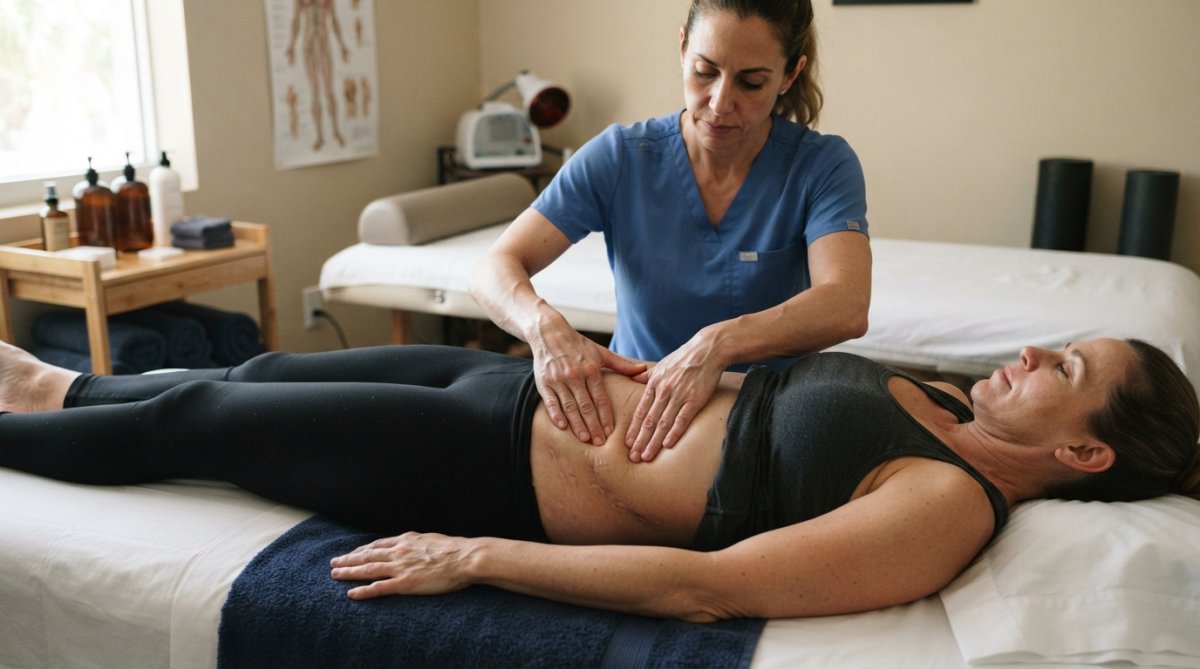
Old fibrosis after lipo is the formation of hardened scar tissue beneath the skin, where healing collagen fibers clump together instead of laying down smoothly. This creates the firm, lumpy skin many patients notice weeks or months after surgery. At Reviv Spa, we see this often in women recovering from lipo, Lipo 360, tummy tucks, and BBLs.
How Fibrotic Bands Form in Subcutaneous Tissue
Fibrotic bands are rope-like strips of connective tissue that pull the skin down and create dents or ridges. They form when fluid collects in the space left behind by removed fat. That fluid, called seroma, presses on surrounding tissue and triggers more scar tissue.
A few things make this worse:
- Poor lymphatic drainage after surgery
- Wearing compression garments inconsistently
- Sitting or lying in the same position for long stretches
- Returning to normal activity too fast
Why Old Fibrosis Behaves Differently Than Early-Stage Scar Tissue
Early fibrosis is soft and still being built. Old fibrosis is mature scar tissue, and it does not respond to the same gentle approach.
How Long Does Fibrosis Last After Lipo?
Most fibrosis softens within 3 to 6 months with consistent care. Old fibrosis that has been present for a year or more can take many months of targeted treatment to break down, and some cases never fully resolve without professional help.
The timeline depends on a few factors:
| Stage | Time Since Surgery | Tissue Feel | What Helps Most |
|---|---|---|---|
| Early | 0-6 weeks | Soft, swollen | Lymphatic drainage, compression |
| Mid | 6 weeks-6 months | Firm, lumpy | Massage, ultrasound, topicals |
| Old | 6+ months | Hard, bound down | Advanced manual work, radiofrequency |
Timeline-Specific Protocols: Early vs. Old Fibrosis
This is the part most guides gloss over. The protocol that works at week three can actually make a year-old band worse, and the protocol that works on a mature band is too aggressive for fresh tissue. Match the approach to the stage.
-
Manual lymphatic drainage two to three times per week, light pressure only
-
Compression garment worn as your surgeon directs, typically most of the day
-
Gentle self-massage once daily, sweeping toward lymph nodes
-
Short, frequent walks to keep circulation moving
-
No deep tissue work, no heat, no aggressive tools
-
MLD one to two times per week, transitioning to firmer myofascial work
-
Therapeutic ultrasound or radiofrequency sessions added, usually weekly
-
Topical scar products applied consistently
-
Compression maintained, especially after activity
-
Self-massage daily, with slow circular pressure on firm spots
-
Advanced manual work, often 60- to 90-minute sessions, weekly or biweekly
-
Radiofrequency and ultrasound used in combination, not as a substitute for hands-on work
-
Myofascial release and skin rolling to separate adhered layers
-
Compression continued indefinitely if your provider recommends it
-
Realistic expectations: measurable change over months, not weeks
If your fibrosis is older than six months, expect a treatment plan measured in months, not sessions. If it is under six weeks, your job is drainage and compression, not force.
Why Old Fibrosis Plateaus
Many patients hit a point where progress stalls. That usually means one of three things: fluid is still pooling and feeding the scar, the bands have adhered to deeper fascia and need a different technique, or the home routine has lapsed. A reassessment with a provider who treats post-op tissue regularly usually identifies which one it is.
Post-Surgical Lymphatic Drainage for Stubborn Fibrosis
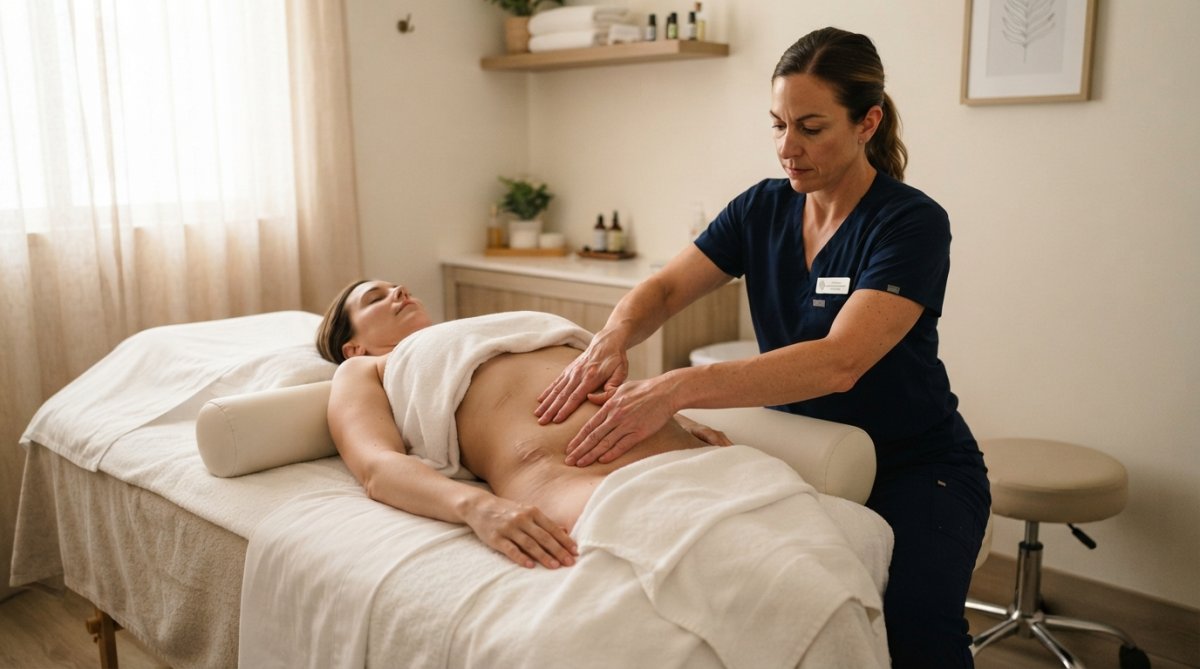
Post-surgical lymphatic drainage is a gentle, rhythmic massage that moves trapped fluid out of swollen tissue and toward your lymph nodes for removal. For old fibrosis, it is the foundation that makes every other treatment work better.
Manual Lymphatic Drainage Techniques That Target Adhesions
Manual lymphatic drainage, or MLD, uses light, precise strokes. For adhesions, the therapist works slowly to lift and separate stuck tissue layers.
Techniques that help with old fibrosis include:
- Myofascial release to loosen tight connective tissue
- Slow, directional strokes toward lymph nodes
- Gentle skin rolling to break up superficial bands
- Deep but controlled work on mature fibrotic areas
How Many Sessions You Might Realistically Need
There is no single number, and any provider who promises one is guessing. In practice, most patients need a series of sessions spread over weeks, not a single visit.
Take photos in the same lighting and pose before your first session and every few weeks after. Tissue changes are slow and subtle, so photos show progress your eyes miss day to day.
Non-Invasive Fibrosis Treatment Options That Work on Older Scar Tissue
Non-invasive fibrosis treatment uses technology and topical products to soften scar tissue without surgery. These options work best when paired with manual therapy, not instead of it.
Therapeutic Ultrasound and Radiofrequency
Therapeutic ultrasound sends sound waves into deep tissue to warm and loosen collagen fibers. Radiofrequency uses controlled heat to encourage collagen remodeling and skin retraction. Both can help stubborn areas that manual work alone cannot reach.
Topical Agents and Compression Garments
Topical agents can support the healing process, but they are not a cure on their own. Look for ingredients studied for scar care, and patch-test first.
Skipping compression because it feels uncomfortable is one of the most common reasons fibrosis gets worse. The discomfort fades; the scar tissue it prevents can last far longer.
What You Can Do at Home Between Professional Sessions
At-home care keeps progress moving between appointments. It will not replace professional treatment for old fibrosis, but it makes every session count for more.
Self-Massage and Myofascial Release Techniques
Self-massage helps maintain what your therapist unlocks. Keep it gentle and consistent.
- Warm the area with a shower or warm compress.
- Use light, sweeping strokes toward your lymph nodes.
- Add slow circular pressure on firm spots, never sharp pain.
- Finish with a soft, full-area sweep.
- Do this once daily, not for hours at a time.
Diet, Hydration, and Lifestyle Support for Tissue Remodeling
What you eat and drink affects how your body rebuilds tissue. This is the part most guides skip.
- Drink water steadily through the day to support lymph flow
- Eat protein at each meal to give your body collagen-building blocks
- Add colorful vegetables for the nutrients that calm inflammation
- Limit alcohol, which slows healing
- Walk daily to keep circulation moving
- Sleep well; most tissue repair happens at night
When to Seek Professional Help (and What to Avoid)
See a qualified professional if your fibrosis is firm, painful, or not improving after months of home care. Also seek care if you notice new swelling, redness, or warmth, since those can signal a problem that needs medical review.
What to avoid:
- DIY tools that dig deep into tissue
- Unlicensed providers with no post-op training
- Promises of guaranteed results
- Waiting years, hoping it resolves on its own
Contraindications: When NOT to Massage or Treat
This is the safety information most guides skip, and it matters. Massaging tissue that should not be massaged can worsen fibrosis, spread infection, or delay a diagnosis.
- Active infection or cellulitis. Signs include spreading redness, warmth, fever, or streaking. Massage can push infection through the lymphatic system.
- Blood clots or suspected DVT. A history of clots, new calf pain, or one-sided leg swelling needs medical evaluation before any bodywork.
- Seroma or hematoma that has not been drained. Fluid collections under pressure should be managed by your surgeon first.
- Open wounds, incisions that have not closed, or drains still in place.
- Active cancer or cancer treatment in the area. Lymphatic work near treated tissue requires oncology clearance.
- Unexplained lumps that are new, hard, fixed, or growing. Get them evaluated before assuming they are fibrosis.
- Bruising from a recent session. Wait for it to resolve; bruising means you went too hard.
More pressure is not more progress. Aggressive massage on old scar tissue can cause bruising and new inflammation, which builds more fibrosis. If a session leaves you sore for days, the pressure was wrong.
The Emotional Side of Long-Term Fibrosis
Most clinical guides ignore this, but it is real. Living with lumpy, uneven results months or years after surgery affects how people feel about their bodies, their clothing, and the money they spent. Anxiety, frustration, and a sense of regret are common.
A few things help:
- Set expectations around timelines, not outcomes. Tissue remodeling is slow and rarely linear.
- Track progress with photos rather than daily mirror checks, which amplify perceived setbacks.
- Talk to a provider who treats post-op tissue regularly and has seen old fibrosis resolve before.
- If body-image distress is affecting daily life, a therapist familiar with post-surgical adjustment can help.
Frequently Asked Questions
What breaks down fibrotic tissue after liposuction?
Fibrotic tissue breaks down through a combination of mechanical disruption and biological remodeling. Manual lymphatic drainage and myofascial release physically separate adhesions and collagen fibers. Therapeutic ultrasound and radiofrequency deliver controlled energy that heats deeper tissue, stimulating collagen remodeling and increasing dermal thickness flexibility. Topical agents may support circulation. No single method works alone; consistent, layered treatment over weeks to months produces the best results. A qualified post-op therapist can assess your specific fibrotic bands and recommend the right combination.
Can you massage out fibrosis that has been there for months?
Yes, older fibrosis responds to massage, but it requires more sessions and a different technique than early-stage scar tissue. Old fibrotic bands are denser and more adhered to surrounding tissue, so a therapist trained in manual lymphatic drainage and myofascial release will use slower, deeper strokes to break down adhesions without damaging healthy tissue. At-home massage between sessions supports the work. Results vary by individual, and a consultation helps set realistic expectations for how long does fibrosis last after lipo in your case.
How long does fibrosis last after liposuction if left untreated?
Untreated fibrosis can persist indefinitely. Some early-stage firmness softens on its own within three to six months as swelling resolves and tissue remodeling progresses. But once fibrotic bands mature, typically after six months, they become denser and less likely to resolve without intervention. Old fibrosis that has been present for a year or longer may require a structured treatment plan combining post-surgical lymphatic drainage, non-invasive therapies, and home care. Seeking professional help early improves outcomes.
When should you seek professional help for post-lipo fibrosis?
Seek professional help if you notice hard lumps, lumpy skin, or fibrotic bands that have not improved after three to six months of home care, or if you have chronic pain, restricted movement, or visible contour irregularities. A licensed therapist experienced in post-operative recovery can assess whether your fibrosis is still in a treatable window and design a plan. If you also have signs of seroma or hematoma, contact your surgeon first. Early professional intervention typically shortens treatment time.
Old fibrosis after lipo can feel like a problem you missed your window to fix. It is not. With the right mix of lymphatic drainage, manual therapy, technology, and daily habits, even mature scar tissue can soften over time. At Reviv Spa, we build personalized recovery plans around your stage of healing, combining Brazilian techniques, red light therapy, and ultrasound in a private, women-focused space. Book your consultation and take the next step toward smoother, more comfortable results.