

Last Updated: November 9, 2026
Quick Summary
The best compression garment fabric for sensitive skin is a nylon-spandex blend for durability, lyocell for reactive skin, organic cotton for contact dermatitis, medical-grade elastomeric fibers for even pressure, and seamless circular knit to avoid seam friction. Choose moisture-wicking, breathable fabrics with flat seams and fragrance-free care.
- Trapped moisture is the root of most garment-related skin irritation.
- Circular-knit fabric stretches evenly and has few or no side seams.
- Disperse dyes on synthetic fibers are a well-recognized cause of textile contact allergy.
- A thin cotton or lyocell liner is the single most effective fix for friction itch.
- Wash garments after every one to two wears in cold water with fragrance-free detergent.
Table of Contents
- Why Compression Garment Fabric Matters for Skin Irritation
- Key Fabric Properties That Protect Sensitive Skin
- The 5 Best Fabrics for Compression Garments
- How to Stop Itching from Compression Garments
- Post-Op Compression Garment Skin Rash: Causes and Fixes
- Caring for Your Garment to Keep It Skin-Friendly
- When to Contact Your Surgeon About Skin Irritation
- Supporting Recovery with Lymphatic Drainage for Post-Op Care
- Frequently Asked Questions
Why Compression Garment Fabric Matters for Skin Irritation
The right compression garment fabric is the single biggest factor in whether recovery feels manageable or miserable. Fabric choice decides how that contact feels hour after hour.
Women who followed every post-op instruction can still end up with red, itchy skin under their garment.
Skin under compression has two jobs it struggles to do at once. It needs airflow, and it needs dryness. The American Academy of Dermatology’s guidance on contact dermatitis explains how friction and moisture together trigger most skin reactions.
Below, this guide covers five commonly used fabrics, plus practical fixes for itching and rashes that can still appear.
Key Fabric Properties That Protect Sensitive Skin
Four properties separate a skin-friendly compression garment from one that causes trouble: moisture management, breathability, chemical cleanliness, and mechanical smoothness. Most shoppers only check the first two. The last two are where irritation usually starts.
Moisture-Wicking and Breathability
Trapped moisture is the root of most garment-related irritation. Wet skin softens, chafes faster, and grows yeast and bacteria more easily. Moisture-wicking fibers move sweat to the fabric surface; breathable weaves let it escape.
Wicking and breathability are not the same thing, and a garment can be strong at one and weaker at the other.
Chemical Cleanliness: Dyes, Finishes, and Latex
A fiber can be gentle and the finished fabric can still irritate, because dyes, softeners, and finishing treatments are added during manufacturing. Some of these can trigger allergic contact dermatitis in sensitive people.
- Disperse dyes, used heavily on synthetic fibers, are a well-recognized cause of textile contact allergy, especially in darker and more saturated colors.
- Formaldehyde-releasing finishes are used for wrinkle resistance and shape retention and are a known sensitizer in some wearers.
- Latex may be present in elastic trims, so check the waistband and edge binding, not just the body panel.
If you have reacted to clothing before, favor undyed, unbleached, or naturally colored garments, and ask the manufacturer directly whether the fabric is finished with formaldehyde or softener treatments. The American Academy of Dermatology’s guidance on contact dermatitis explains how these chemical and friction triggers combine.
Weave and Seam Construction
Seams can contribute to irritation, since a raised seam pressing into the same spot for weeks can create a friction line on the skin.
Construction matters as much as fiber here:
- Flat-knit fabric is dense and firm, holds strong compression, and is common in structured post-surgical garments. It is durable but less breathable.
- Circular-knit fabric is knitted in a continuous tube, so it stretches evenly in every direction and has few or no side seams. It is generally the gentler choice for reactive skin.
- Flat seams are stitched flat so the bulk sits away from the skin; overlock seams leave a raised ridge that can chafe at fold lines.
Watch out: A garment that fits perfectly at the seams but bunches elsewhere will still chafe, because friction follows pressure, not stitching. Fit and construction have to work together.
Friction Reduction and Surface Smoothness
Smooth filament fibers such as nylon and lyocell tend to glide against skin, while staple fibers such as cotton have short ends that can feel rougher over hours of wear. Surface smoothness, seam placement, and fit together decide how much friction the skin actually feels.
The 5 Best Fabrics for Compression Garments
The best compression garment fabric balances pressure, breathability, and softness against your skin. Here are five options that do it well, ranked by how well they protect sensitive skin.
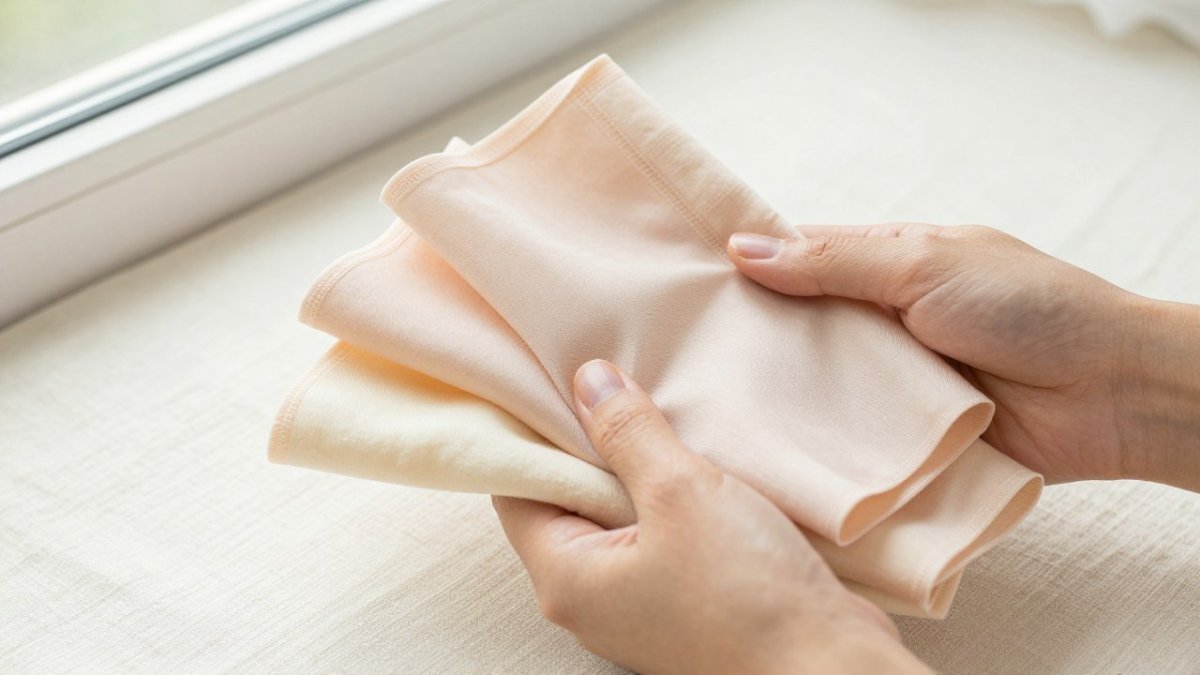
1. Nylon-Spandex Blend
Nylon-spandex is the workhorse of post-op compression. The nylon gives durability and a smooth surface.
This blend is generally described as wicking moisture reasonably well and holding its shape through repeated wear.
Best for: Most post-op patients who want proven, durable compression.
Skip if: You have a known sensitivity to synthetic polymers. Patch test first.
2. Lyocell
Lyocell is a plant-based fiber made from wood pulp. It feels silky and is generally regarded as moisture-managing.
Best for: Sensitive or reactive skin that reacts to synthetics.
Skip if: You need maximum compression hold. Lyocell is usually blended with spandex for structure.
3. Organic Cotton
Organic cotton is generally breathable and is produced without many of the synthetic treatments used in conventional cotton.
It is not as stretchy as synthetics, so cotton garments usually blend with a small amount of elastane to keep pressure without sacrificing softness.
Best for: Women prone to contact dermatitis or heat rash.
Skip if: You sweat heavily. Cotton holds moisture longer than wicking synthetics.
4. Medical-Grade Elastomeric Fibers
Medical-grade elastomeric fibers are engineered for consistent, controlled compression.
Consistent pressure can help reduce bunching, which in turn can reduce chafing.
Best for: Women who need reliable, even compression after liposuction or tummy tuck.
Skip if: You want a soft, cotton-like feel. These fibers are functional first. (Source: research on disperse dyes and textile allergies)
5. Seamless Circular Knit
Seamless circular knit is a construction rather than a fiber, and it earns its place.
Circular knit also stretches evenly in every direction.
Best for: Anyone who has had seam-related irritation before.
Skip if: You need structured panels for targeted compression. Some surgical garments require them.
| Fabric | Breathability | Moisture-Wicking | Best For |
|---|---|---|---|
| Nylon-spandex | Good | Good | Most post-op patients |
| Lyocell | High | High | Sensitive, reactive skin |
| Organic cotton | High | Moderate | Contact dermatitis, heat rash |
| Medical-grade elastomeric | Moderate | Good | Even, controlled pressure |
| Seamless circular knit | Good | Good | Seam-related irritation |
If you are still comparing fabric options and want specific garments to shop, this guide to the best compression garments for post-op recovery narrows down real picks.
How to Stop Itching from Compression Garments
Itching under a compression garment usually comes from trapped moisture, friction, or a mild contact reaction.
Start with these steps:
- Wear a thin cotton or lyocell liner between skin and garment. This is the single most effective fix for friction itch.
- Keep skin completely dry before putting the garment on. Pat, do not rub.
- Wash the garment with fragrance-free detergent and rinse twice.
Layering is the technique most guides skip. A seamless liner absorbs friction and wicks moisture away from skin, and it costs far less than replacing a garment.
If indentations or pressure marks are the problem rather than itch, this guide on a faja causing skin indentations covers what to do next.
Post-Op Compression Garment Skin Rash: Causes and Fixes
A post-op compression garment skin rash is most often contact dermatitis, heat rash, or a friction burn. Each looks slightly different and needs a different response, and sorting out which one you have is the fastest route to relief.
Match the Rash to the Cause
- Contact dermatitis appears as red, itchy patches, sometimes with small blisters, in the exact area where fabric, dye, finish, or detergent touches skin. It often appears days after first wear rather than immediately, which is why women blame the surgery instead of the garment.
- Heat rash (miliaria) shows up as tiny uniform bumps in sweaty, occluded areas such as the waistband, under the bra line, or behind the knee. It clears when airflow and dryness improve.
- Friction burns look raw, shiny, or slightly broken at seams, fold lines, and edges. They follow mechanical pressure, not chemistry.
Watch out: A rash that spreads, blisters, oozes, or feels hot may be an infection. Stop self-treating and call your surgeon.
Fabric-Specific Allergy Testing
If reactions persist after you switch to fragrance-free detergent and add a liner, the next step is to isolate the fabric itself. Here is a practical method to discuss with your surgeon or dermatologist:
- Keep a wear log. Note the garment, the wash routine, the hours worn, and where the rash appears. Patterns emerge within a week or two.
- Switch one variable at a time. Change detergent first, then liner, then garment. Changing everything at once tells you nothing.
- Do a home patch test on a small area. Tape a square of the suspect fabric to the inner forearm for 24 to 48 hours, then check for redness or itching. This is a screening step, not a diagnosis.
- Ask about formal patch testing. A dermatologist can run a standard textile series that includes disperse dyes, formaldehyde resins, and rubber accelerators, the most common textile allergens. This is the only way to confirm a true fabric allergy.
- Check the trims. Latex and rubber accelerators often hide in waistbands, edge binding, and silicone grip strips even when the body fabric is latex-free.
A fabric allergy is possible but less common than friction or moisture irritation. The log-and-isolate approach keeps you from replacing garments blindly.
Fixes That Actually Work
- Add a seamless liner. A thin cotton, silk, or lyocell liner between skin and garment is the single most effective fix for friction itch, and it costs far less than replacing a garment.
- Keep skin completely dry before putting the garment on. Pat, do not rub.
- Wash with fragrance-free, dye-free detergent and rinse twice to remove residue.
If indentations or pressure marks are the problem rather than itch, this guide on a faja causing skin indentations covers what to do next.
Caring for Your Garment to Keep It Skin-Friendly
How you wash and store a compression garment decides how skin-friendly it stays. Residue, stretched fibers, and trapped bacteria all cause irritation.
Follow these habits:
- Wash after every one to two wears in cold water.
- Use fragrance-free, dye-free detergent.
- Skip fabric softener, which coats fibers and blocks wicking.
For a broader look at protecting your results while you heal, this guide on how post-op care accelerates healing covers the full recovery picture.
When to Contact Your Surgeon About Skin Irritation
Call your surgeon if irritation comes with any of these signs:
- Spreading redness or warmth
- Blisters, oozing, or open skin
- Fever or chills
These can signal infection or a circulation problem, and both need prompt care. Mild itch that improves with a liner and better hygiene can usually wait for your next visit.
Skin sensitivity after a tummy tuck is common and often temporary. This article on abdominal skin sensitivity after a tummy tuck explains what is normal and when to worry.
Supporting Recovery with Lymphatic Drainage for Post-Op Care
Fabric choices protect the skin surface. Lymphatic drainage supports what happens underneath.
Lymphatic drainage for post-op recovery is a gentle manual technique that moves trapped fluid toward lymph nodes, helping reduce swelling, ease pressure on healing tissue, and support comfort during recovery.
At Reviv Spa, Brazilian-trained therapists use gentle, rhythmic strokes tailored to each stage of healing. For local patients, post-op massage in Fort Lauderdale pairs professional lymphatic care with your at-home garment routine.
Good fabric and good drainage work together. One protects the skin, the other supports the tissue beneath it.
Recovery goes better when your garment and your care plan work as a team.
Frequently Asked Questions
What fabric is the least irritating to skin for post-op compression?
There is no single fabric that suits every person, but nylon-spandex blends and lyocell are common starting points because they balance moisture-wicking with a smooth surface. Seamless construction reduces friction, and hypoallergenic options help if you have known sensitivities. If you notice redness, itching, or a rash, stop using the garment and contact your surgeon before switching fabrics, since irritation can also signal poor fit or a reaction that needs medical review.
Are synthetic or natural fibers better for post-surgical compression?
Both have a role. Synthetic polymers like nylon and spandex provide the mechanical pressure and elasticity compression therapy requires, while natural fibers such as organic cotton feel softer against the skin barrier. Many well-made garments blend the two. The better choice depends on your skin sensitivity, how much breathability you need, and your surgeon’s guidance. If you have contact dermatitis or a latex allergy, check the label for latex-free and hypoallergenic claims before buying.
How do I care for my compression garment to keep it skin-friendly?
Wash the garment according to the manufacturer’s instructions, usually in cool water with a mild detergent, and rinse thoroughly to remove residue that can irritate the skin. Avoid fabric softeners and harsh bleaches, which can break down elastomeric fibers and reduce fabric durability. Air-dry when possible to protect the elasticity. Rotating between two garments helps you keep one clean while the other is in use, which supports skin integrity and consistent compression therapy.
When should I contact my surgeon about skin irritation from compression?
Contact your surgeon if you develop a spreading rash, open sores, increasing pain, significant swelling that worsens, or signs of infection such as warmth or fever. Mild itching can sometimes be managed with fit adjustments or a fabric change, but post-op skin changes deserve a professional look. Your surgeon can rule out contact dermatitis, poor fit, or other causes and advise whether you should pause compression or switch garments. Do not adjust compression timing on your own.
