

Last Updated: October 23, 2026
Quick Summary
Radiofrequency skin tightening is good for recovery because it improves blood circulation, encourages collagen production, and helps the body move stagnant fluid after surgery. It supports skin quality and circulation rather than treating the surgical wound itself, so timing and surgeon clearance matter.
- RF skin tightening is generally safe after surgery once the surgeon clears the patient and incisions are fully closed.
- Expect mild redness and warmth for a few hours, with many returning to normal activity the same day.
- Most meaningful collagen change shows up between two and six months after treatment.
- Pairing RF with lymphatic drainage addresses both fluid movement and skin quality during recovery.
- Avoid hot tubs, saunas, and strenuous exercise for the rest of the day after a session.
Table of Contents
- How Radiofrequency Skin Tightening Supports the Recovery Process
- The Recovery Benefits of Radiofrequency Skin Tightening, Explained
- Is RF Skin Tightening Safe After Surgery?
- Radiofrequency Treatment After Liposuction: What to Know
- RF Skin Tightening Recovery Time and What to Expect
- RF Skin Tightening Results Timeline: When Changes Appear
- Pairing RF With Lymphatic Drainage for a Fuller Recovery
- Conclusion
- Frequently Asked Questions
How Radiofrequency Skin Tightening Supports the Recovery Process
Radiofrequency skin tightening is a non-invasive treatment that uses thermal energy to warm the deeper layers of skin, and it can support the recovery process by improving blood circulation, encouraging collagen production, and helping the body move stagnant fluid after surgery.
Below, this guide explains what the treatment does beneath the skin, who it suits, and how to time it around surgery. It also covers the risks, the recovery timeline, and why pairing it with lymphatic drainage often makes more sense than using either approach alone.
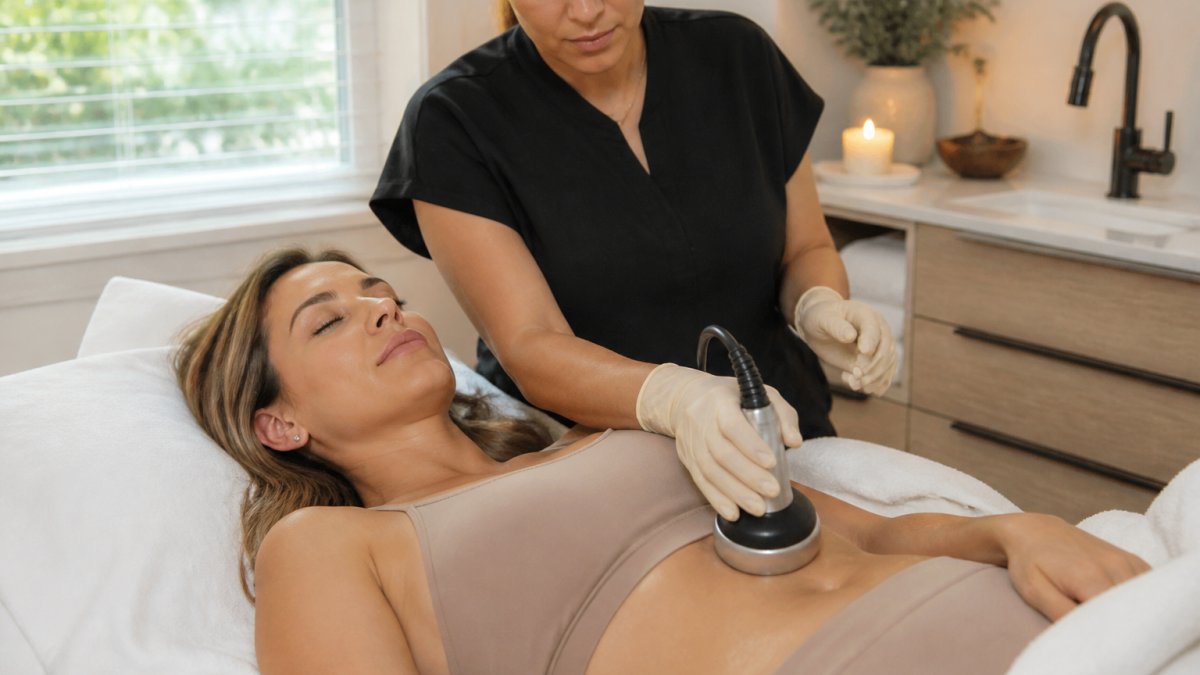
What Radiofrequency Treatment Actually Does Beneath the Skin
Radiofrequency skin tightening is a non-invasive procedure that delivers controlled thermal energy into the dermis while cooling the epidermis, the outer layer, to keep it comfortable.
Three things happen as a result:
- Tissue contraction gives a mild firming effect
- Collagen production builds support back into the skin
- Blood circulation improves, which helps tissue receive oxygen and nutrients
That last point matters most for recovery. Better circulation supports cellular turnover and helps the body clear waste from tissue that has been through trauma. The treatment does not dissolve fat, remove fluid, or replace manual therapy.
The Recovery Benefits of Radiofrequency Skin Tightening, Explained
The strongest argument for radiofrequency skin tightening during recovery is that it addresses something surgery leaves behind: loose, uneven skin and sluggish circulation. After liposuction or a tummy tuck, the skin has to re-drape over a new contour.
The main benefits people ask about:
- Firmer skin texture as new collagen builds over time
- Improved blood flow to tissue that is healing
- Softer fine lines and wrinkles in treated areas
- Better skin tone as cellular turnover picks up
- Support for skin laxity that follows volume changes
- A non-invasive option with no incisions and minimal downtime
What most guides miss is that these benefits build gradually. No single session remodels tissue. The body does that work between appointments, which is why spacing and patience matter more than intensity.
Ask about the device type before booking. Monopolar and bipolar radiofrequency systems deliver heat differently, and fractional radiofrequency creates tiny zones of controlled injury. The right choice depends on the treatment area and how much skin laxity is present, so a hands-on assessment should come first.
Is RF Skin Tightening Safe After Surgery?
RF skin tightening is generally considered safe after surgery once the surgeon clears the patient, but timing and candidacy matter more than the device itself. The skin must be fully closed, swelling should be past its peak, and any drains or sutures should be resolved. A qualified provider should confirm all three before treatment begins, and the surgeon, not the spa, makes the final call on timing for the treated area.
Safety depends on a few practical factors:
- Surgeon clearance for the specific area being treated
- Fully closed incisions with no signs of infection
- Sensation returning to the area, so heat feedback is reliable
- Realistic device settings matched to healing tissue
- Realistic expectations about what heat can and cannot do for post-surgical skin
Who Should Avoid RF Treatment
Most guides stop at “talk to your doctor.” The more useful answer is a clear list of situations where radiofrequency is the wrong tool, at least for now. A responsible provider screens for these before booking:
- Open wounds, active infection, or unhealed incisions in the treatment area
- Implanted electronic devices such as pacemakers or defibrillators, since thermal energy can interfere with them
- Pregnancy, out of caution, even though RF is not intended for the abdomen during this time
- Active skin infections, severe eczema, or psoriasis flares over the treatment zone
- Certain clotting or bleeding disorders, which should be reviewed with the surgeon first
- Impaired sensation in the area, because the client cannot reliably report heat
- A history of poor wound healing, keloids, or unusual scarring
- Recent isotretinoin use or other medications that increase photosensitivity, depending on the provider’s protocol
- Metal implants or permanent dermal fillers in the treatment area, which warrant a conversation with the surgeon
This is not an exhaustive list, and it is not a diagnosis. It is a starting point for the intake conversation. Anyone with a health condition that affects healing, circulation, or sensation should raise it with their surgeon before scheduling.
What the FDA Clearance Actually Means
The FDA guidance on radiofrequency devices is clear that these devices are cleared for specific cosmetic uses, not for post-surgical wound healing. That distinction matters. The treatment supports skin quality and circulation. It does not treat a surgical wound, and it should never be presented as doing so. A provider who blurs that line is overselling.
Starting radiofrequency too early, before incisions are fully closed and swelling has settled, can irritate healing tissue and set recovery back. Wait for explicit surgeon clearance rather than guessing based on how the area looks. If you notice increasing pain, spreading redness, fever, or drainage, stop and contact your surgeon, those are not treatment side effects, they are reasons to pause.
Radiofrequency Treatment After Liposuction: What to Know
Radiofrequency treatment after liposuction works best as a later-stage addition, not an early one. The first weeks after liposuction are about managing swelling and supporting fluid movement.
Here is how the two approaches divide the work:
| Phase | Primary Focus | Role of RF |
|---|---|---|
| First 2-4 weeks | Swelling, fluid movement, gentle care | Not yet, surgeon guidance first |
| Weeks 4-8 | Softening tissue, easing tightness | Often introduced once cleared |
| Month 2 and beyond | Skin firmness, contour refinement | Regular sessions as advised |
The logic is straightforward. It does not replace compression garments, lymphatic drainage, or the body’s own healing work.
A common mistake is treating radiofrequency as a fix for fibrosis. Hard, fibrous areas need hands-on assessment, and sometimes manual fibrosis treatment. Heat alone will not resolve them.
RF Skin Tightening Recovery Time and What to Expect
RF skin tightening recovery time is short for most people. Expect mild redness and warmth in the treated area for a few hours. Many return to normal activity the same day.
During the procedure itself, most people describe a warm, deep heating sensation. A cooling step protects the epidermis, so discomfort stays low. Sessions typically run under an hour depending on the area.
A Practical Aftercare Protocol
Most articles say “low downtime” and stop there. The recovery phase is where the real work happens, and a few simple habits support it. These are general guidelines, always follow your provider’s and surgeon’s specific instructions, which take priority.
In the first 24 hours:
- Keep the area clean and moisturized with a gentle, fragrance-free product
- Skip hot tubs, saunas, steam rooms, and very hot showers, since added heat can compound the warmth already in the tissue
- Avoid strenuous exercise and heavy sweating for the rest of the day
- Skip alcohol, which can increase flushing and dehydration
For the first week:
- Stay hydrated; circulation and collagen remodeling both depend on it
- Use broad-spectrum sunscreen on any treated area that will see sun, and reapply as directed
- Avoid harsh exfoliants, retinoids, and active acids on the treated area unless your provider says otherwise
- Keep compression garments on schedule if your surgeon has prescribed them after surgery, RF does not replace that routine
Ongoing:
- Moisturize daily to support the skin barrier
- Protect treated skin from sun exposure, which is the single most common way clients undo cosmetic progress
- Report anything unusual, blistering, persistent pain, changing skin color, or numbness, to your provider and surgeon rather than waiting
What Normal Recovery Looks Like, and What Isn’t
Mild redness, warmth, and a faint flushed look are expected and fade within hours. Slight tenderness for a day or two is common. What is not normal: blistering, significant swelling that worsens rather than improves, skin that feels numb or burns, or any sign of infection.
For post-operative clients, downtime is rarely the concern. The bigger question is whether the tissue is ready. That is a clinical call, and it belongs to the surgeon.
RF recovery is short, but it is not passive. Hydration, sun protection, gentle skincare, and honoring compression garments do more for your results than squeezing in extra sessions. When in doubt, ask your provider before adding anything new to the routine.
RF Skin Tightening Results Timeline: When Changes Appear
The RF skin tightening results timeline is measured in months, not days. Some people notice firmer skin within a few weeks. Most meaningful change shows up between two and six months as new collagen accumulates. Collagen remodeling is slow by nature.
What drives the timeline:
- Number of sessions completed
- Device type and settings used
- Treatment area and skin thickness
- Age and baseline collagen levels
- Overall healing response after surgery
Consistency beats intensity. A steady schedule spaced as the provider advises tends to produce smoother, more even results than clustered sessions. Anyone promising a fixed outcome by a fixed date is overselling.
Pairing RF With Lymphatic Drainage for a Fuller Recovery
Pairing radiofrequency with lymphatic drainage addresses two different problems at once. Drainage moves fluid and supports the body’s natural waste clearance. Radiofrequency works on skin quality and circulation. Together they cover both the fluid side and the skin side of recovery.
Brazilian lymphatic drainage helps reduce swelling and ease tightness, while targeted treatments support skin firmness as tissue settles. The approach is individualized because no two recoveries look alike.
Recovery has two tracks: fluid management and skin quality. Lymphatic drainage handles the first. Radiofrequency supports the second. Treating both, on a schedule your surgeon approves, tends to serve clients better than focusing on one alone.
Conclusion
Recovery after cosmetic surgery asks a lot of the body, and the skin often needs extra support to settle into its new shape. Radiofrequency skin tightening offers a non-invasive way to support circulation, collagen production, and skin firmness, provided it is timed correctly and cleared by the surgeon. Reviv Spa offers Brazilian lymphatic drainage, fibrosis-focused care, and a private, women-focused setting in Fort Lauderdale. Curious whether it fits your recovery plan?
American Society of Plastic Surgeons on nonsurgical skin tightening
Frequently Asked Questions
How long does radiofrequency skin tightening take to work?
Most people notice early changes in skin texture and firmness within a few weeks, but the more visible tightening tends to build over two to three months as collagen production ramps up. Collagen remodeling is a gradual process, so results are cumulative rather than immediate. Your surgeon’s guidance and the device used will shape the schedule.
Can radiofrequency skin tightening help after plastic surgery?
Radiofrequency skin tightening is often used as a supportive add-on during post-op recovery because it delivers gentle thermal energy that encourages collagen and elastin production while supporting blood circulation. It does not replace lymphatic drainage or your surgeon’s aftercare plan. Whether it fits your recovery depends on your procedure, healing stage, and surgeon’s clearance, so always confirm timing with your surgeon before booking.
When can you have radiofrequency treatment after surgery?
There is no single universal timeline. Most surgeons want incisions to be closed and initial swelling to settle before adding thermal treatments, and the exact window depends on your procedure and how you are healing. Some patients are cleared within a few weeks; others wait longer. Get explicit clearance from your surgeon, then book a consultation so the team can assess your skin and recovery stage before starting.
What is the difference between radiofrequency skin tightening and RF microneedling?
Radiofrequency skin tightening delivers thermal energy to the dermal layers through the skin’s surface, without puncturing it. RF microneedling uses fine needles to deliver heat deeper at precise depths, which involves more downtime and a different risk profile. For post-op recovery, non-invasive RF is generally gentler and easier to layer alongside lymphatic drainage, while RF microneedling is often reserved for later stages once healing is complete.
