

Last Updated: November 1, 2026
Quick Summary
Lipo 360 recovery generally unfolds over six to twelve weeks, with the most noticeable swelling and soreness easing within the first two to three weeks. Most women return to desk work in about a week and to vigorous exercise somewhere between weeks four and six, though your timeline depends on the number of areas treated, individual healing, and surgeon guidance.
- The first 24 to 72 hours are the most demanding stretch, with drainage, soreness, and swelling beginning.
- Weeks one and two bring peak swelling, and most women can manage light household tasks by the end of week two.
- Desk workers often return within the first two weeks, while physically demanding jobs usually need more time and explicit surgeon clearance.
- Lower-body exercise is often resumed around week four to six with approval, while vigorous cardio and heavy lifting wait longer.
- Final contour arrives over months, not weeks, so judging your result at week four is usually premature.
Table of Contents
- Lipo 360 Recovery Timeline at a Glance
- The First 24 to 72 Hours After Lipo 360
- Weeks 1 to 2: Swelling, Soreness, and Early Mobility
- How to Reduce Swelling After Lipo 360
- When to Start Lymphatic Massage After Lipo
- The Benefits of Compression Garments After Liposuction
- Weeks 3 to 6: Returning to Work, Exercise, and Normal Life
- Post-Op Lymphatic Drainage Massage in Fort Lauderdale
- Frequently Asked Questions
Lipo 360 Recovery Timeline at a Glance
Lipo 360 recovery generally unfolds over six to twelve weeks, with the most noticeable swelling and soreness easing within the first two to three weeks. Most women return to desk work in about a week and to vigorous exercise somewhere between weeks four and six, but the timeline shifts with the number of areas treated, individual healing, and surgeon guidance. This guide from Reviv Spa walks through each stage so you know what to expect and when to check in with your surgeon.
The single most useful thing to understand about lipo 360 recovery is that feeling better and looking finished are two different milestones. Patients often feel close to normal weeks before the final contour appears. That gap trips up a lot of people.
| Stage | Typical timeframe | What to expect |
|---|---|---|
| First 24-72 hours | Days 0-3 | Drainage, soreness, swelling begins |
| Early healing | Weeks 1-2 | Peak swelling, limited mobility |
| Transition | Weeks 3-6 | Return to work and light exercise |
| Refinement | Weeks 6-12+ | Swelling subsides, contour settles |
Why Lipo 360 Recovery Differs From Standard Liposuction
Lipo 360 treats the abdomen, flanks, and back as one continuous area, so recovery involves more tissue than a single-site procedure. More treated surface usually means more swelling, more soreness, and a longer stretch before the body reabsorbs the fluids involved. That is not a complication; it is the nature of a larger treatment area. Compression and lymphatic care tend to matter more here, and the visible result arrives more gradually.
The First 24 to 72 Hours After Lipo 360
The first 24 to 72 hours are the most demanding stretch of lipo 360 recovery, and they are also when the difference between a three-zone procedure and a single-site one is most obvious. Because the abdomen, flanks, and back are treated as one continuous area, expect soreness that wraps around your torso rather than sitting in one spot, tightness when you take a deep breath, and drainage from more than one incision site.
What the first three days tend to look like
- Day 0 (surgery day): You are usually too sleepy to do much beyond short walks to the bathroom. Drainage output is often heaviest now. Keep a pad or towel under you and follow your surgeon’s dressing instructions exactly.
- Day 1: Swelling and tightness increase before they ease. Soreness is often described as a deep bruise or a heavy, sunburned feeling across the whole midsection. Walking short distances every couple of hours is usually encouraged to support circulation.
- Day 2 to 3: Bruising often deepens and may spread below the treated area. Drainage typically starts to slow. Many patients begin to need less pain medication, though this varies widely.
Practical guidance competitors often skip
- Sleeping: Most surgeons ask you to sleep on your back with your head and upper body slightly elevated, and to avoid sleeping flat on your stomach or directly on treated flanks. A wedge pillow or a stack of pillows behind the shoulders is a common workaround. Follow whatever positioning your own surgeon specifies.
- Bathing: Do not shower until your surgeon clears you, and never submerge incisions in a bath, pool, or hot tub during early healing. Sponge baths are a common interim option.
- Driving: Wait until you are off opioid pain medication, can move freely enough to brake safely, and have your surgeon’s approval. Many patients are told to hold off for at least the first several days.
Contact your surgeon promptly if you notice shortness of breath or chest pain, a fever, spreading redness or warmth around an incision, foul-smelling drainage, calf pain or swelling in one leg, or swelling that becomes rapidly worse on one side. These can signal a problem that needs medical attention rather than home care. When in doubt, call, do not wait for your next follow-up.
A common mistake is skipping the prescribed walking because it feels uncomfortable. Gentle, frequent movement early on supports circulation and is one of the few things you can do to help swelling along. Strenuous activity, lifting, and anything that raises your heart rate significantly should wait for clearance.
Weeks 1 to 2: Swelling, Soreness, and Early Mobility
Weeks one and two bring peak swelling and the first real sense of mobility returning. Bruising often looks its worst now, and the treated area may feel firm or lumpy. If you are unsure whether what you are feeling is normal, learning to tell seroma from ordinary swelling can help you decide when to call your surgeon.
Most women can manage light household tasks by the end of week two. Pain medication needs usually drop, and sleep becomes easier. Compression stays on except for showers and brief breaks approved by your surgeon.
How to Reduce Swelling After Lipo 360
Reducing swelling after Lipo 360 comes down to consistency: wear your compression as directed, walk gently and often, stay hydrated, and keep your follow-up appointments. Elevating the treated area when resting and avoiding salty, processed foods can also help.
For a deeper, practical walkthrough of at-home strategies, this guide on how to manage swelling after liposuction at home covers the day-to-day details.
When to Start Lymphatic Massage After Lipo
Most surgeons clear patients for lymphatic massage within the first week or two after liposuction, but the exact timing depends on your procedure and healing. The right answer is the one your surgeon gives you. Once cleared, professional lymphatic drainage can support fluid movement and comfort, and many patients schedule sessions regularly through the early weeks.
A common mistake is waiting until swelling feels unmanageable. Starting when your surgeon approves, rather than when discomfort peaks, tends to make the process smoother.
The Benefits of Compression Garments After Liposuction
Compression garments support the healing process by applying steady pressure to treated areas, which helps manage swelling and support the skin as it settles around new contours. Most surgeons ask patients to wear compression for several weeks, tapering the schedule over time.
Choosing the right garment matters as much as wearing it. This roundup of the best compression garments for post-op recovery covers fit, fabric, and features worth comparing.
Weeks 3 to 6: Returning to Work, Exercise, and Normal Life
Weeks three through six are when life starts to feel recognizable again, and also when the gap between feeling recovered and looking finished becomes most obvious. This is the section most timeline articles gloss over, so it is worth slowing down here.
Feeling recovered vs. seeing final results
These are two different clocks, and they rarely move together:
| Milestone | Typical window | What it means |
|---|---|---|
| Discomfort largely gone | Weeks 2-4 | Day-to-day soreness fades; you can move more freely |
| Back to desk work | Often within 1-2 weeks | Sitting, typing, and light commuting are manageable |
| Cleared for light exercise | Often weeks 4-6 | Walking expands to lower-body work with surgeon approval |
| Swelling noticeably down | Weeks 6-12+ | Contour begins to read more clearly |
| Final contour | Months, not weeks | Residual swelling and skin settling continue well past the six-week mark |
Many patients feel close to normal weeks before the final shape appears. That is expected, not a sign something went wrong. Judging your result at week four is usually premature.
Returning to work
Desk workers often return within the first two weeks, sometimes sooner if their surgeon agrees and their commute is manageable. Physically demanding jobs, nursing, teaching, retail on your feet, lifting, or anything with repetitive bending, usually need more time and explicit surgeon clearance. Plan for more recovery than you think you need if your job involves lifting or long shifts.
Exercise and movement
Light walking can usually expand gradually through this window. Lower-body exercise is often resumed around week four to six with approval, while vigorous cardio, heavy lifting, and core-focused work typically wait longer. Returning too fast can increase swelling and set comfort back, so build up in steps rather than jumping back to your old routine.
Lumps, firmness, and fibrosis concerns
This is also when lumps or firmness may become easier to feel as swelling recedes. Some firmness is a normal part of early healing; persistent or painful areas are worth raising with your surgeon. Understanding what fibrosis after plastic surgery looks like helps you know what is expected and when to ask. Do not attempt aggressive self-massage or heat before your surgeon clears it.
Practical questions this window raises
- Travel: Short trips are often possible once you are off pain medication and comfortable sitting, but long flights and extended car rides are usually discussed with your surgeon first. Compression and walking breaks matter.
- Wardrobe: Loose, front-closing clothing is easier than anything you pull over your head or squeeze into during the first weeks.
- Photos: Take progress photos in consistent lighting. Swelling changes day to day, and photos are a more reliable reference than the mirror on a given morning.
Treat weeks three through six as a bridge, not a finish line. You are likely back to much of your routine, but your body is still remodeling. Keep compression and follow-up appointments as directed, and let your surgeon, not a calendar, decide when you are cleared for the next step.
If you are building lymphatic care into this stage, explore post-op lymphatic drainage in Fort Lauderdale to see how sessions are structured around your surgeon’s guidance.
Post-Op Lymphatic Drainage Massage in Fort Lauderdale
Post-op lymphatic drainage massage is a gentle, targeted technique that supports fluid movement and comfort during recovery.
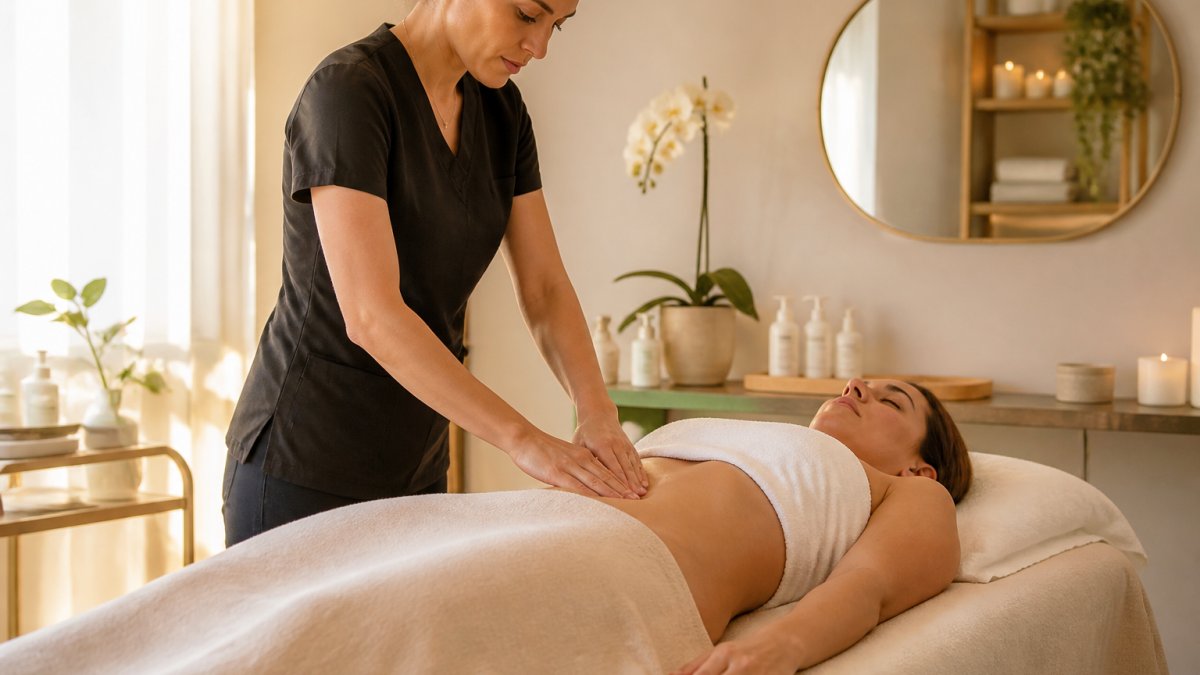
If you are ready to build lymphatic care into your recovery plan, you can explore post-op lymphatic drainage in Fort Lauderdale to see how sessions are structured and how to book.
Recovery after Lipo 360 asks for patience and the right support at each stage.
Frequently Asked Questions
How long are you in pain after Lipo 360?
Most soreness and tenderness peak in the first three to five days and ease steadily over the following two weeks. Many women describe the sensation as heavy, bruised, and tight rather than sharp pain, and it usually eases enough to move comfortably with light walking. Prescription pain medication is typically used only in the earliest days, with over-the-counter options like acetaminophen afterward. If pain suddenly increases, becomes one-sided, or does not improve after the first week, contact your surgeon rather than waiting it out.
Why do I look bigger three weeks after liposuction?
Swelling is the usual reason. Postoperative fluid and inflammation can make the treated area look fuller at two to three weeks than it did right after surgery, which surprises many patients. This is a normal part of healing, not a sign the procedure failed. Compression garments, walking, and lymphatic massage all help move that fluid along. Visible contour changes typically emerge as swelling subsides over the following weeks, and final results usually take several months to settle.
How long should I wear compression garments after Lipo 360?
Compression duration is set by your surgeon and varies with the areas treated and how much fluid is present. Many patients wear a garment continuously for the first several weeks and then transition to part-time wear. The benefits of compression garments after liposuction include reduced swelling, support for the treated contours, and comfort during movement. Follow your surgeon’s specific schedule, and ask before shortening or extending it.
When can I return to work after Lipo 360?
Desk-based work is often possible within about one to two weeks, depending on swelling, soreness, and how you feel. Physically demanding jobs usually require more time, sometimes three to six weeks, and your surgeon will confirm when it is safe. Walking is encouraged early, but heavy lifting and strenuous activity are typically postponed. Ask your surgeon for a written return-to-work plan so your employer and your recovery stay aligned.
When will I see the final results of my Lipo 360 procedure?
Feeling recovered and seeing final results are two different milestones. Most women feel close to normal within four to six weeks, but swelling continues to resolve gradually, and contour often keeps refining for several months. Lipo 360 recovery is a process of gradual improvement rather than a single date. Take photos at consistent intervals to track changes, and discuss any concerns about your contour at your follow-up appointments.
When should I start lymphatic massage after lipo?
Timing depends on your surgeon’s protocol and your healing. Many surgeons clear patients for gentle lymphatic massage within the first one to two weeks, while others prefer to wait longer. Never book a session without that clearance, and choose a therapist experienced with post-operative clients. At Reviv Spa, sessions are tailored to your stage of healing and coordinated with your surgeon’s guidance.
